
What Are the Top Locations in Iceland to View the Northern Lights?

Why East Iceland Is Ideal for Northern Lights
East Iceland combines three conditions that aurora hunters look for: dark skies, open space, and steady winter weather. Together, these conditions make the region one of Iceland's more reliable places to watch the sky in winter.
- Minimal light pollution: Small communities such as Seyðisfjörður, Borgarfjörður Eystri, Djúpivogur, Vopnafjörður and Stöðvarfjörður are surrounded by vast, sparsely populated landscapes. A short trip beyond the town lights can bring you to remarkably dark skies, creating excellent conditions for spotting even faint auroras.
- Less crowded than the South Coast and Reykjavík area: Aurora hunters in the east often have entire fjords to themselves, with no tour buses competing for the same viewpoint.
- Clear winter skies and remote landscapes: Inland valleys near Egilsstaðir often sit above coastal cloud cover, giving travelers a better shot at clear viewing nights.
Top Northern Lights Spots in East Iceland
East Iceland offers some excellent spots for aurora hunters, each with dark skies and easy access. Every location also adds a scenic backdrop that makes the wait for the lights worthwhile. Here are some great northern lights spots to add to your list.
1. Borgarfjörður Eystri
Known as Iceland's puffin capital in summer, Borgarfjörður Eystri turns into a quiet aurora outpost once the puffins leave. The village sits at the end of a remote valley, well away from any city lights. On clear nights, the mountains around the village create a wide, dark frame for viewing the northern lights.
2. Seyðisfjörður
Seyðisfjörður is best known for its Rainbow Street and Blue Church. Its narrow fjord setting also works well after dark. Steep mountain walls block stray light from the town below, leaving the sky open for northern lights viewing. Many visitors combine a daytime walk down Rainbow Street with an evening hunt for the northern lights along the water.
3. Vök Baths
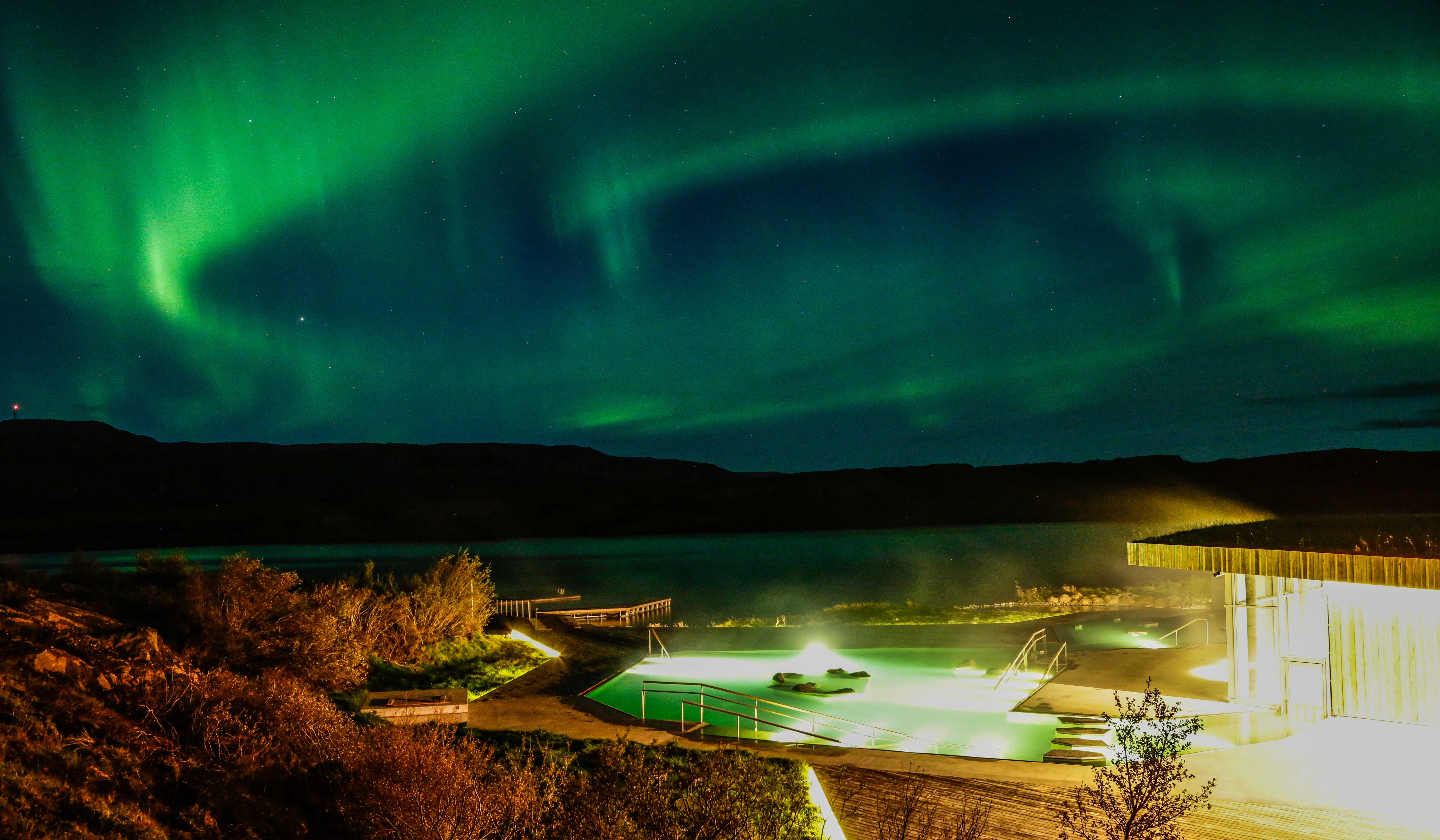
Vök Baths sits on Lake Urriðavatn near Egilsstaðir, with floating geothermal pools open year round. Soaking in warm water while watching the sky is a comfortable way to wait for aurora activity. The lake's open setting offers a wide, unobstructed view in most directions.
4. Hallormsstaður
Hallormsstaður National Forest offers dark, peaceful surroundings with little light pollution, making it a great place to watch the northern lights. The forest, lake and surrounding mountains create a beautiful natural setting for the experience.
5. Egilsstaðir and Lake Lagarfljót
Egilsstaðir works well as a home base for aurora hunting, with Lake Lagarfljót just minutes from downtown. The lake's flat, open shoreline gives a clear line of sight across the water on calm nights. Visitors with only a short layover often choose Egilsstaðir for easy access to several other spots in one evening.
6. Djúpivogur
Djúpivogur is a peaceful coastal village surrounded by dramatic mountains and open landscapes. With little light pollution beyond the village, it is easy to find dark viewing spots along the coast. On clear, calm nights, the fjord and surrounding mountains can provide a beautiful backdrop for the northern lights.
7. Vopnafjörður
Vopnafjörður's remote location and sparse population make it a natural choice for northern lights hunting. A short drive outside the village takes you into wide, open landscapes with very little artificial light. The coastline, valleys and mountains offer plenty of opportunities to find a dark spot and wait for the aurora.
8. Stöðvarfjörður
The small village of Stöðvarfjörður sits between the mountains and the sea, surrounded by the quiet landscapes of the Eastfjords. Head just beyond the village lights for darker skies and open views across the fjord. When conditions are right, the mountains and water create a striking setting for watching and photographing the northern lights.
When to See the Northern Lights in East Iceland
Timing your visit right makes a real difference, since both the season and the sky conditions affect what you will see. Here is what to know about the best months, viewing hours, and forecast tools, all part of finding the top locations in Iceland to view the northern lights.
Best months
The Northern Lights season in East Iceland typically runs from late August through April. Early in the season, sightings stay faint and require very dark, clear nights. By September, hours of darkness increase enough to make northern lights viewing more reliable on most evenings. Many travelers plan a trip to East Iceland around this window.
Best viewing conditions
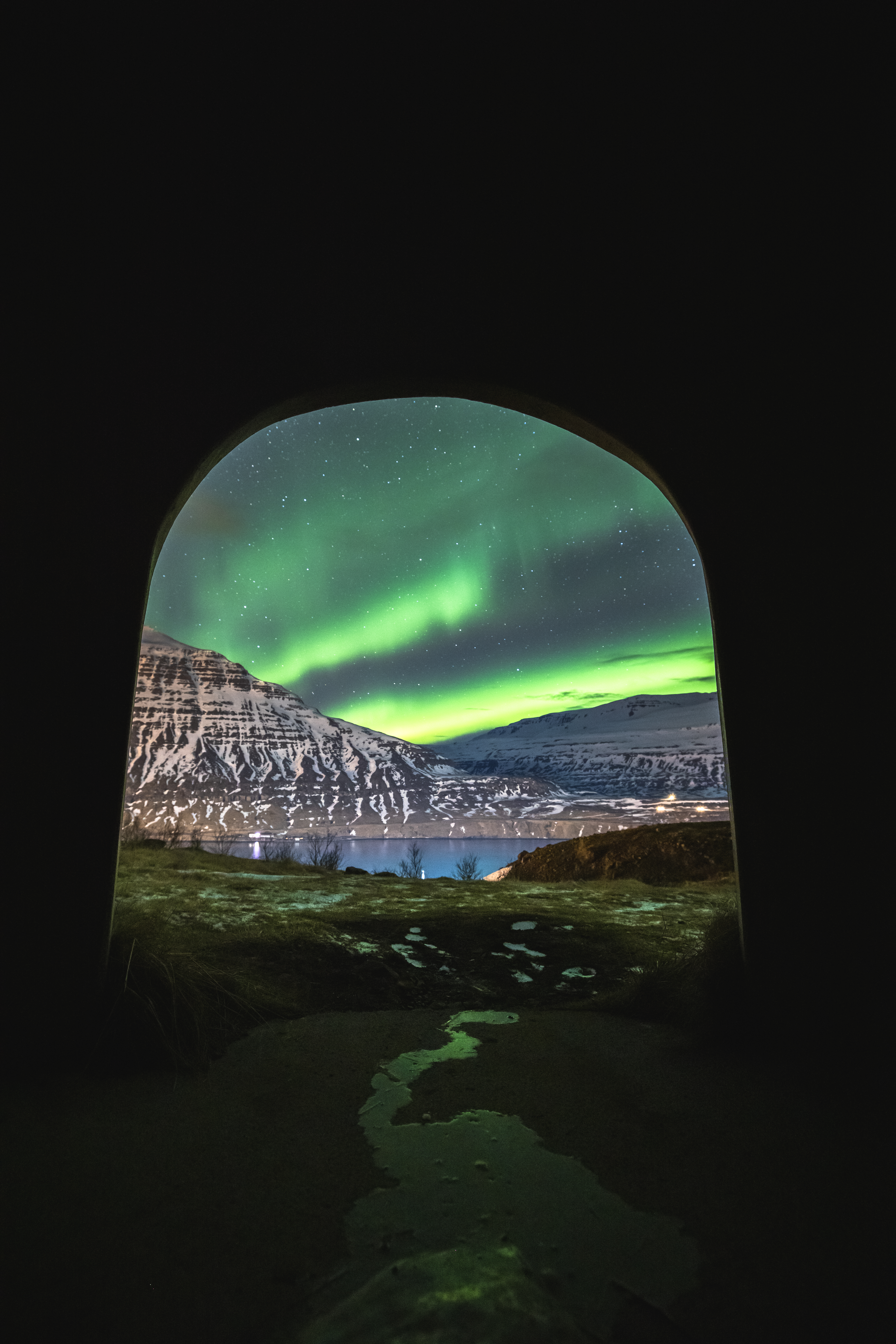
Clear skies matter more than the calendar date. Aurora activity can appear on any night when solar wind from the sun interacts with Earth's magnetic field. Knowing how to find the aurora borealis in East Iceland helps you spot the signs worth watching for once the skies are dark. The best viewing window usually falls between 9 pm and 1 am, once the skies are fully dark.
Aurora forecasts and weather apps
The Icelandic Meteorological Office publishes a free aurora forecast that combines solar activity with cloud cover maps. Find it at en.vedur.is. Checking this forecast before heading out can save a long, cold wait under clouded skies.
Tips for a Successful Northern Lights Hunt
A successful aurora hunt depends on a few simple habits, from finding dark skies to dressing for the cold. Timing matters too, so it helps to check the best time to see the northern lights in East Iceland before settling on your travel dates. These tips will help you stay comfortable and ready when the lights finally appear.
Escape artificial lights
Driving even 10 minutes outside any town removes most city lights from view. Look for pull offs along quiet stretches of road, away from streetlights and parking lot lamps. A genuinely dark sky makes faint auroras far easier to spot.
Dress for winter conditions
Standing still for an hour or more in freezing temperatures takes a toll quickly. Pack thermal layers, waterproof boots, and a hat that covers your ears. Bring a thermos of something hot to make the wait more comfortable.
Bring a camera or smartphone with night mode
Most modern smartphones now include a night mode setting built for low light scenes. A tripod helps keep the shot steady during longer exposures. For sharper results, a camera with manual settings still outperforms a phone in most conditions. A few tips on capturing the northern lights in Austurland can help turn a quiet evening under the sky into a lasting photo.
Why Choose East Iceland Over Other Regions?
East Iceland offers a different kind of aurora trip, built around quiet roads and small communities. There is little need for a crowded guided tour bus to reach a clear view. For travellers who prefer a guided experience, Northern Lights tours are also available in the region.
- Fewer tourists: The region sees far fewer visitors than the South Coast, even during peak winter months.
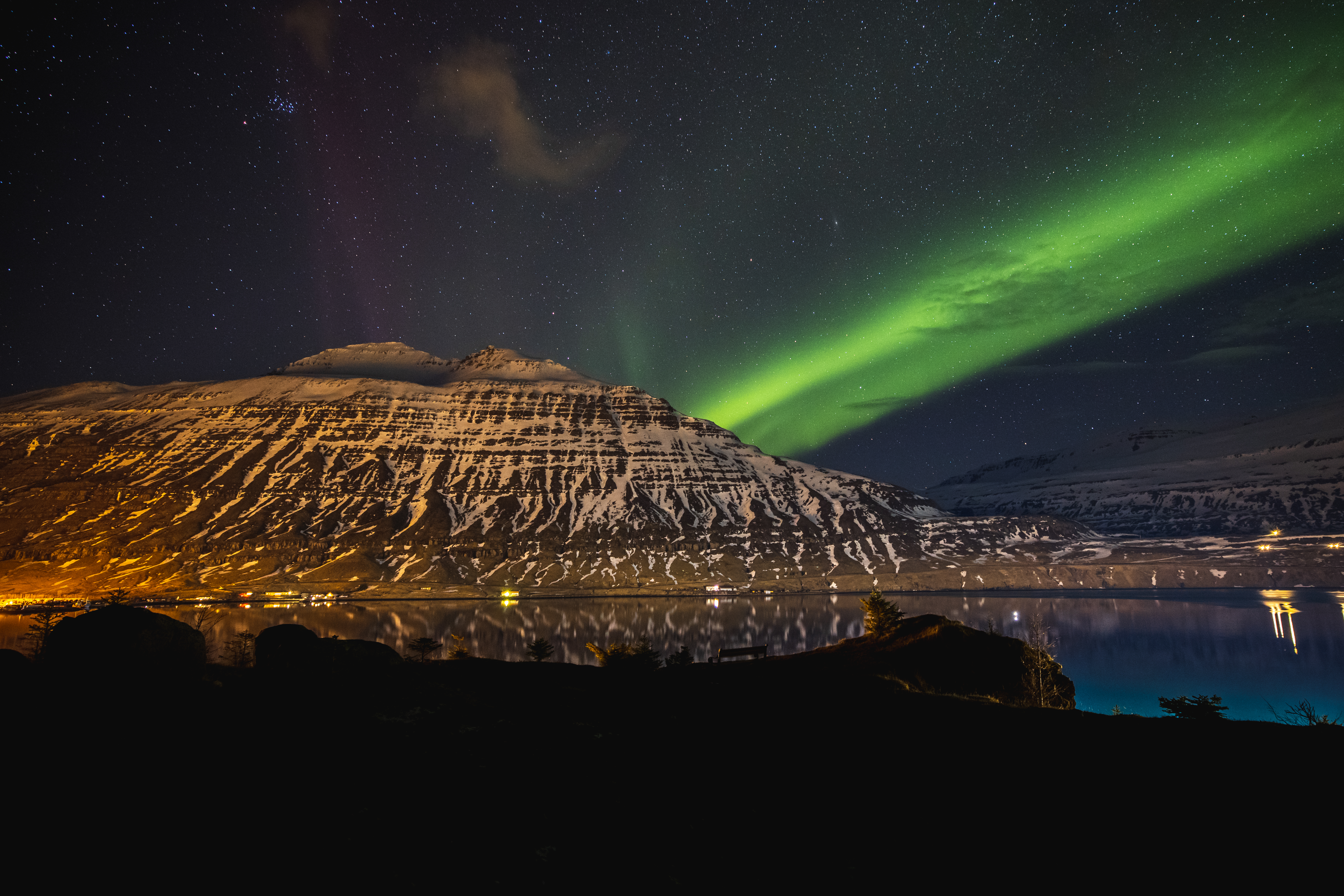
- Steep fjords and a rugged coastline: Jagged mountains and narrow inlets frame almost every viewpoint, day or night.
- A calmer pace: Travelers spend more time watching the sky and less time waiting in line for the next stop.
The East Iceland Aurora Advantage
East Iceland brings together dark skies, low light pollution, and landscapes that hold their own even without an aurora overhead. Travelers chasing the the top locations in Iceland to view the northern lights will find a quieter view in the east. Plan around darkness, check the forecast, and give yourself a few nights to wait for the right conditions. The reward is a night sky shared with very few other people.

Can you see the northern lights in August?
The northern lights season usually starts in late August, when nights begin to darken again. Sightings before then are rare because summer nights stay too bright.
Which part of Iceland is best for seeing the northern lights?
The Northern Lights can appear anywhere in Iceland with dark, clear skies. East Iceland offers some of the top locations in Iceland to view the northern lights with low light pollution and fewer crowds.
When is the best time to visit Iceland for the northern lights?
The most reliable months run from September through April, when nights are long and dark. Equinox months like September and March often bring strong aurora activity.
Do I need a guided tour to see the northern lights in East Iceland?
A guided tour is not required, since clear nights away from town often reveal the aurora on their own. Many travelers prefer a self drive trip to reach quiet viewpoints at their own pace.
How many nights should I plan for an aurora hunt?
Plan for at least three nights, since cloud cover or low solar activity can block any single evening. Booking flexible accommodation across the region improves your odds of catching clear skies.