
Austurland is probably not best known for exciting architecture, but in the past years, a few buildings have risen that are well worth exploring.
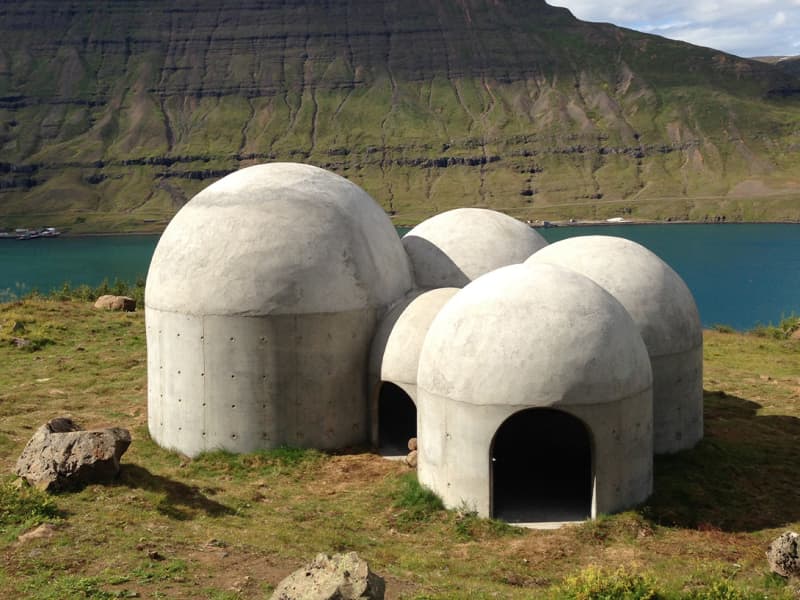
Tvísöngur Sound Sculpure
Tvísöngur sculpture, by artist Lukas Kühne, mixes concrete, nature, and sound to create an interactive tribute to Iceland’s unique tradition of five-tone harmony.
The installation piece looks like a grouping of interconnected cement bubbles from afar. Up close the five segments are quite large, ranging from roughly 6 to 12 feet tall and can be entered via rounded arches built into the walls. Once inside the stark industrial domes, visitors will find that they have each been designed to resonate at different harmonies as the wind blowing in off the cliff rushes through the openings. The collective effect is almost as though the wind itself is playing a giant instrument.
The five chambers of the piece are meant to recall the Icelandic musical tradition of quintal harmony, with each dome reflecting a tone in the tradition. Juxtaposed with the serene and stark surroundings, it seems as though Iceland itself is creating the music. Tvísöngur is a permanent work and is meant to keep the country’s musical traditions alive, which is not an easy thing to do simply with concrete.
View

Stórurð Service Cabin
When development started on the hiking trails and surrounding area to Stórurð and Dyrfjöll it was decided to build a service cabin for the area. The cabin strengthens sustainable travel in the area in by increasing the infrastructure surrounding a popular tourist area. The area surrounding these popular destinations can now withstand more traffic, increases; the security of tourists, nature conservation and pride amongst locals.
The architecht behind the cabin is Erik Rönning Andersen. The design is original and modern and clearly inspired by the legendary Dyrfjöll. Emphasis was placed on the building being environmentally friendly and requiring little maintenance - which is reflected in the simple choice of materials.The building is modest and simple but serves its purpose well in great harmony with the surrounding nature. The house is composed of two separate cottages; one houses a toilet and the other an information and viewing space.
View

Hafnarhús
At Hafnarhólmi in Borgarfjörður eystri a new, magnificent building was unveiled in 2020. Not only had there been a lack of facilities for fishermen and other dock workers of Borgarfjörður harbor - but also for the enormous number of tourists who make their way to the puffin nesting ground in Hafnarhólmi each year. The municipality, therefore, decided to host a design competition in collaboration with the Association of Icelandic Architects for the construction of a new facility in the area.
The winning submission came from Anderson & Sigurdsson architects. The house is plain and fits well in with the surroundings, but still is an attraction in itself and catches the eye of everyone who visits the area.
View

Vök Baths
Vök Baths is a geothermal destination on the beautiful Lake Urriðavatn in East Iceland. Located in only a 5-minute drive from Egilsstaðir, the largest settlement in the East, Vök Baths is an essential stop on any visit to this part of the country.
At Vök Baths you will find, floating geothermal pools with infinity view, two on shore hot pools, a sauna, cold water spray tunnel, tea bar, an in water pool bar, and the on-site restaurant Vök Bistro.
View
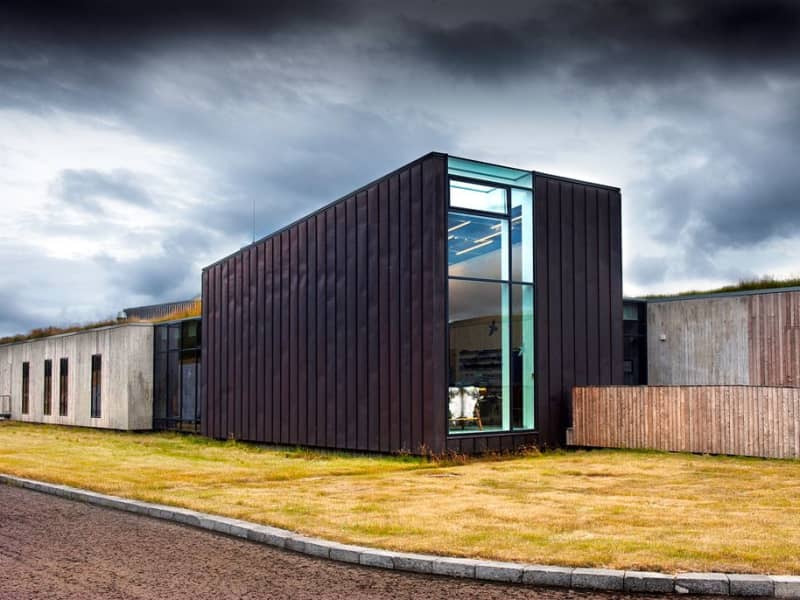
Snæfellsstofa Visitor Centre, Skriðuklaustur
Snæfellsstofa is the information center for the eastern territory of Vatnajökull National Park. It is situated at Skriðuklaustur in an environmentally friendly building. The house itself is the first of its kind in the country. It is designed and built according to environmentally sound standards (BREEAM).
In Snæfellsstofa you can find an exhibition about nature and wildlife in the area, multimedia and activities for children. Souvenir shop with focus on local products, coffee sale and internet on site. Free admission.
Vatnajökull National Park is one of the largest National Parks in Europe. It was established in 2008 and covers an area of around 15000 square kilometers which is about 15% of the surface of Iceland. The glacier covers about half of the Park, offering a unique interplay between fire and ice, volcanic activity, glacial and geological formations and waterfalls. The Park contains many areas of historical interest and an extraordinary variety of landscapes which contain some of the nation´s greatest natural treasures. It occupies a very important place in the world of natural science, due to, among other things, the dynamic interaction between fire and ice, which is still very much at work today.
In 2019, Vatnajökull National Park was inscribed upon the UNESCO World Heritage List.
View

Skriðuklaustur, Centre of culture & history
Skriðuklaustur is the former home of the famous author Gunnar Gunnarsson (1889-1975). Since 2000 it has been open as a centre of culture & history with various activities and exhibitions. It houses a museum about the author with personal guidance about his life and career as well as the adventure of building a mansion in Fljotsdalur valley in 1939.
The house itself is one of Iceland’s most treasured buildings, donated to the Icelandic nation by the author in 1948. It was designed by the German architect Fritz Höger.
At Skriðuklaustur, you can also have a look at the ruins of a medieval Augustinian monastery from the 16th century which was excavated at the beginning of the 21st century. The ruins are accessible all year round, close to the author's home. The exhibition about medieval life and the excavation can be found in the cultural centre which also houses the restaurant Klausturkaffi.
Opening hours
April - May: Open daily 11am - 5pm June - August: Open daily 10am - 5pmSeptember - October 13th: Open daily 11am - 5pm
View