
A 3 Day Self Drive Iceland Itinerary in East Iceland

Why Choose East Iceland for a Self Drive Trip?
East Iceland offers a different side of the country than the better known Golden Circle and South Coast. Instead of crowded viewpoints and busy tour buses, travelers find quiet fjords, forest trails, fishing villages, and open stretches of road. The region is also home to wild reindeer in East Iceland, making wildlife sightings possible throughout much of the year.
Travelers with a rental car will find Austurland especially rewarding. Scenic routes connect waterfalls, canyons, geothermal baths, and coastal communities without requiring long detours. In winter, dark skies create excellent opportunities to see the northern lights, while summer brings long daylight hours and access to hundreds of kilometers of hiking trails.
3 Day Self Drive Iceland Itinerary in East Iceland: Day-by-Day Guide
East Iceland offers endless possibilities for adventure, breathtaking nature, scenic hikes, unforgettable experiences, and exceptional local food. We highly recommend staying for a few extra days to truly explore everything this remarkable region has to offer, there is simply so much to see and do.
This 3 day self drive itinerary is just one idea to inspire your journey. Whether you're chasing waterfalls, hiking through dramatic landscapes, soaking in geothermal baths, discovering charming villages, or enjoying fresh local cuisine, the possibilities are endless.
East Iceland truly has it all.
Each day in this itinerary builds on the last, moving from forest and waterfall to canyon and fjord. The pace stays relaxed, with time built in to stop along the way.
Day One: Egilsstaðir and Hengifoss Waterfall
Begin in Egilsstaðir, the regional hub of East Iceland and a natural starting point for this trip. Driving along the ring road through Austurland from Reykjavik covers about 650 km (404 miles). The trip takes roughly eight hours without stops, so flying into Egilsstaðir Airport saves a full day. The town sits beside Lagarfljót, a long lake bordered by forested hills.
A short drive from town leads to Hallormsstaðaskógur, Iceland's largest forest. The arboretum houses around 80 tree species from around the world. That stands out, since trees cover only 2% of Iceland's land area. Over 40 km (25 miles) of marked trails wind through birch and pine, past two campsites and picnic spots.
From the forest, continue to Hengifoss, one of Iceland's tallest waterfalls at 128 meters (420 feet). The hike from the parking area takes 40 to 60 minutes each way, passing red and black rock layers. The waterfall drops past striped basalt and clay, shaped by volcanic activity between ice ages.
Travelers with extra time can end the day at the Reindeer Park in Egilsstaðir. It is the only place in Iceland to see wild reindeer up close.
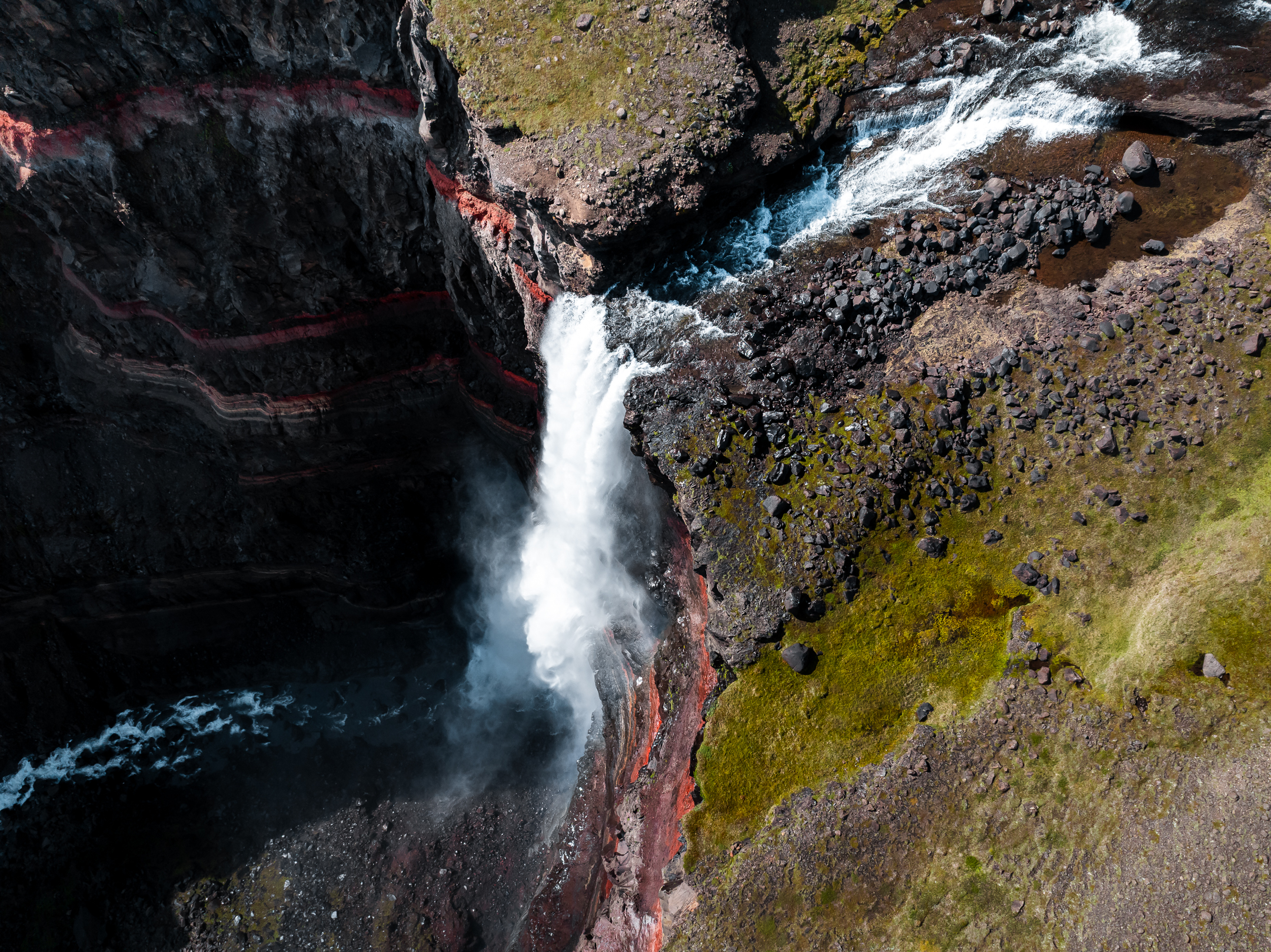
Hengifoss. Photographer: Þráinn Kolbeinsson
Day Two: Stuðlagil Canyon and the Jökuldalur Valley
Day two heads inland to the Jökuldalur valley, home to Stuðlagil Canyon's blue green river framed by basalt columns. The drive from Egilsstaðir takes about an hour through quiet farmland. The valley once supported small farms, and a few still operate along the road today.
The west side observation platforms at Grund offer the closest view of the canyon walls without a long hike. The east side trail takes longer to reach, with a drive around the river first. For travelers with just one day, the west side usually makes for an easier, shorter walk.
Stuðlagil Canyon sits along a quiet branch off the main ring road, set apart from the busier coastal routes.
On clear nights, the open valley sky around Jökuldalur offers a good chance to spot the northern lights in Iceland. The best window runs between September and April. Egilsstaðir's distance from larger towns keeps light pollution low.
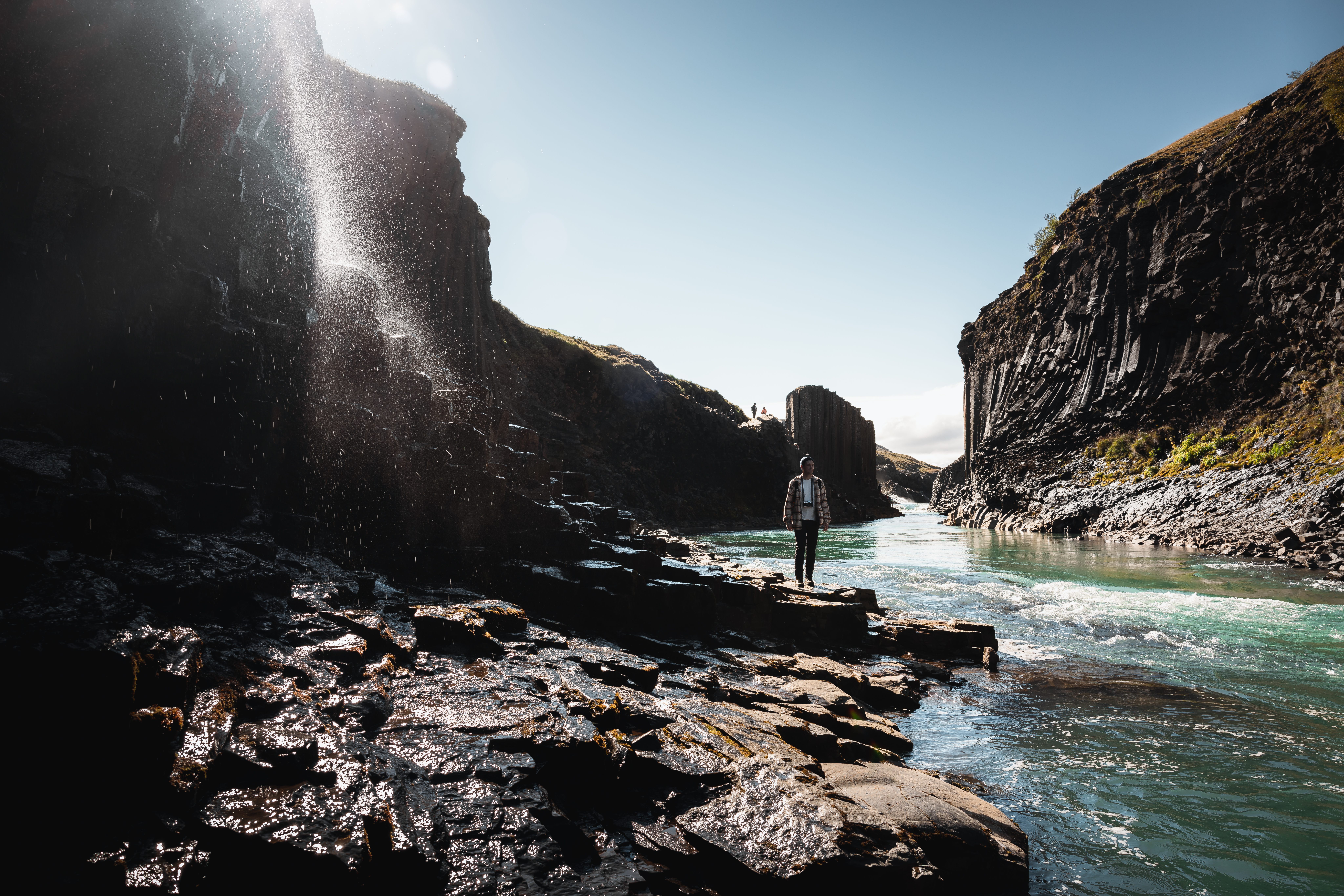
Stuðlagil. Photographer: Þráinn Kolbeinsson
Day Three: Seyðisfjörður and Vök Baths
Day three crosses the mountain pass into Seyðisfjörður, a fjord town built around a working harbor. The drive from Egilsstaðir takes about 30 minutes, with views over Fjarðarheiði on a clear day. Snow can close the pass in winter, so check road conditions before driving over.
Rainbow Street leads from the harbor to the town's pale blue church, a familiar sight in photos of East Iceland. Walking the full street takes about 10 minutes, with cafes and small shops along the way. It's one of the best things to do in Seyðisfjörður.
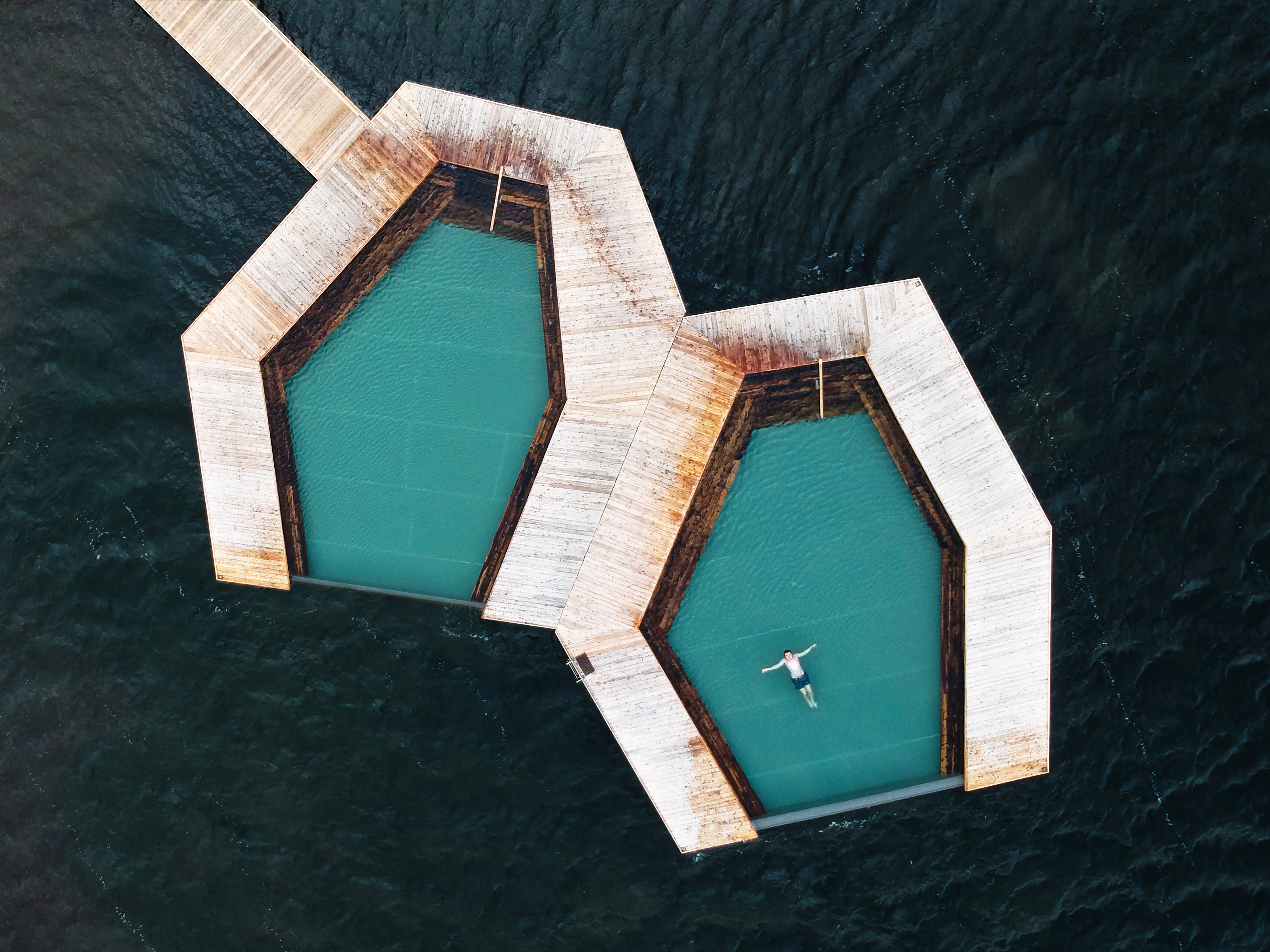
Before heading back toward Egilsstaðir or the airport, stop at Vök Baths on Lake Urriðavatn. Geothermal springs feed the floating pools, keeping the water warm year round. Geothermal springs feed the floating pools on Lake Urriðavatn, keeping the water warm year round. It's one of the quieter, more local bathing experiences in Iceland.
Travelers with time before flying out can fill the day with forest walks and hot baths. Local museums round out the options for a relaxed final day.
What Is East Iceland Like to Visit in Winter?
Winter covers Austurland in snow, frozen waterfalls, and quiet fjords. Low light pollution and wide open skies make this one of the best times to see the northern lights. It is also a good season to spot wild reindeer, which move to lower ground as snow covers the highlands.
Mountain passes like Fjarðarheiði need extra driving time in winter, so check road conditions daily. The reward is a quieter side of Iceland, far from the busiest routes.
Travel Tips for a Self-Drive Trip in East Iceland
A few practical details make this East Iceland trip easier to plan. They cover the road, the weather, and the basics of getting around.
1. Vehicle and road conditions
Anyone who rented a car for this trip should check tire and headlight settings before leaving Reykjavik or Egilsstaðir. East Iceland's main roads stay paved, though some side roads turn to gravel. Basic insurance covers paved roads, but gravel road coverage costs extra at most rental counters.
2. Weather and daylight
Check the Icelandic weather forecast each morning, since mountain conditions shift fast. Daylight hours vary widely by season, so plan drive times around sunset. Summer temperatures in East Iceland typically run 44.6°F to 47.3°F (7°C to 8.5°C). Conditions can shift quickly, so layers help year-round.
- Fuel and accommodation
Towns in East Iceland can sit far apart, so fill the tank whenever a fuel station appears. Book accommodation ahead of time during the summer.
Plan Your Three-Day East Iceland Trip
This 3 day self drive Iceland itinerary through Austurland skips the crowds of South Iceland and rewards travelers with canyons, peaceful fjords, and authentic local experiences. The route covers Hengifoss, Stuðlagil Canyon, and Seyðisfjörður's Rainbow Street, all at a relaxed pace. Pair it with a stop in South Iceland, or let it stand on its own.
East Iceland has the same ring road as the rest of the country, just with fewer cars on it. Start mapping out your own three days, and see what destinations across Austurland catch your eye.

Is three days enough time for East Iceland?
Three days can give enough time to see Stuðlagil Canyon, Hengifoss, and Seyðisfjörður without rushing. Travelers with more time can add more fjord stops or extend toward the south coast.
What is the best month to visit East Iceland?
June through September offer the longest daylight hours and easiest driving conditions. For northern lights viewing and snowy landscapes, visit between September and April.
What are some hidden gems in East Iceland?
Páskahellir cave near Neskaupstaður and Hólmanes Nature Reserve stays quiet even in summer. Both sit off the main route most travelers follow. Check out our hidden gems.
Do you need a 4x4 to drive in East Iceland?
A standard car handles the main paved roads, including the route to Stuðlagil Canyon's west viewpoint. A 4x4 helps on gravel side roads or in winter snow.
Can you see the northern lights in East Iceland?
Yes, dark skies away from larger towns make East Iceland a good spot for the northern lights. The best chance falls between September and April, on clear nights.
Can this itinerary connect to a trip to South Iceland?
Yes, the ring road links East Iceland directly to the south coast and the Golden Circle. Many travelers combine the two regions into a single longer Iceland itinerary.