
Guide to Dyrfjallahlaupið | East Iceland Trail Race

Guide to Dyrfjallahlaupið
Dyrfjallahlaupið is an annual trail running race in Borgarfjörður Eystri, East Iceland. With 12 km, 24 km, and 50 km distances along the Víknaslóðar hiking trails, it attracts runners seeking a remote mountain race experience far from Iceland's more crowded events.
There are no spectators on the remote sections, no urban backdrop, and no terrain quite like it anywhere else in the Icelandic race calendar. If you are thinking about signing up, this guide covers everything you need to know.
Where Is Dyrfjallahlaupið Held?
Dyrfjallahlaupið takes place in Borgarfjörður Eystri, a small fjord village on the east coast of Iceland. The village has around 100 permanent residents, a puffin colony at Hafnarhólmi just outside the harbor, and no through traffic. Arriving here feels different from most race destinations.
The race finishes at the village's small boat harbor, with routes starting from different points along the Víknaslóðar trail network. Egilsstaðir is the nearest large town, roughly 70 km (43 miles) away. That distance is exactly what keeps the race crowd free and the atmosphere focused.
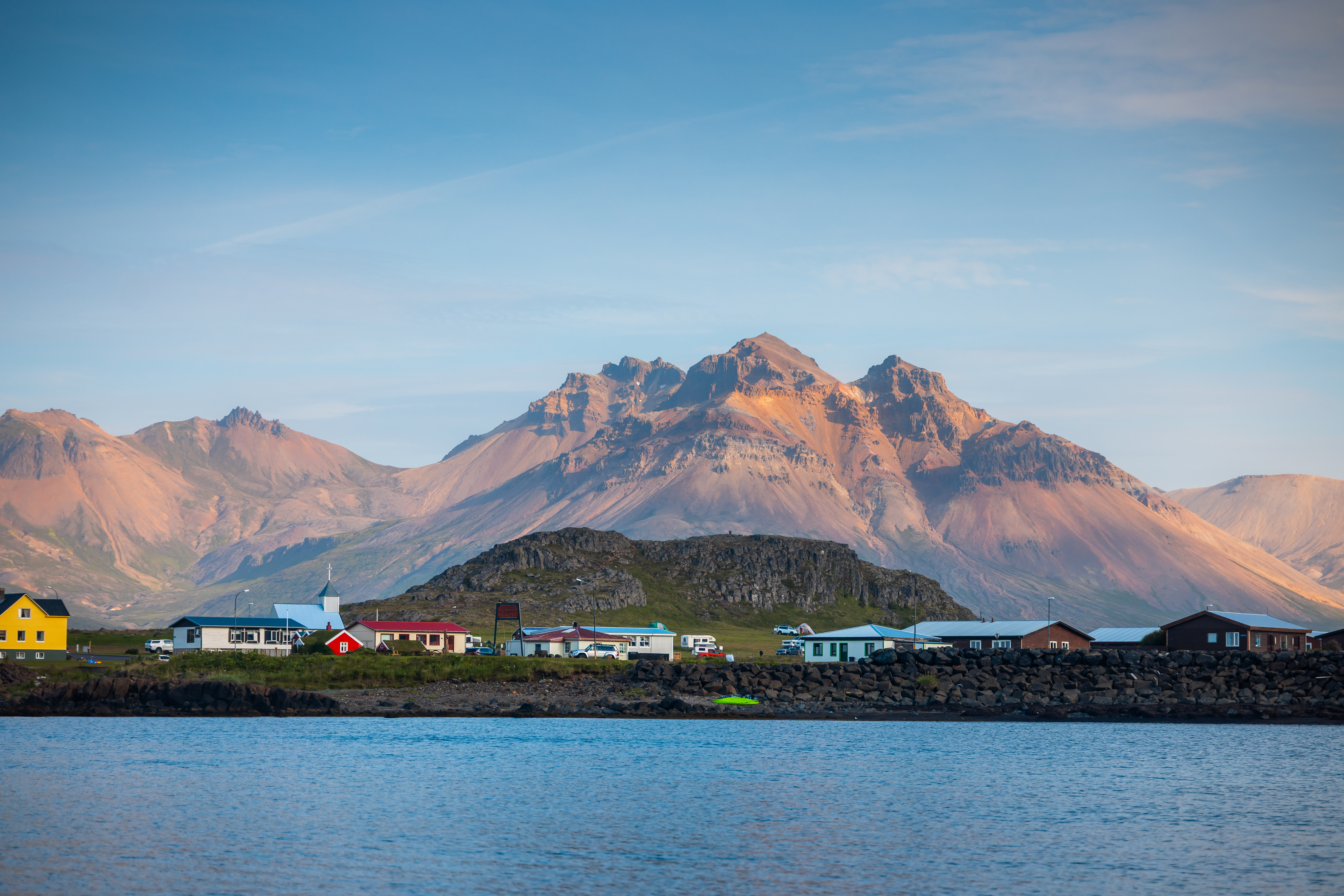
Borgarfjörður Eystri. Photographer: Þráinn Kolbeinsson
The Race at a Glance
The 2026 race takes place on 4 July 2026. Three distances are available, each covering a different stretch of the trail network.
|
Distance |
Total Elevation Gain |
Highest Point |
|
12 km (Brúnavík) |
735 m (2,411 ft) |
354 m (1,161 ft) |
|
24 km (Víknaslóðaleið) |
1,076 m (3,530 ft) |
445 m (1,460 ft) |
|
50 km (Ultra) |
2,600 m (8,530 ft) |
683 m (2,241 ft) |
The 12 km (7.5 miles) route starts at Hólahorn and follows a rough jeep track over Hofstrandarskarð pass. After crossing the Brúnavíkurá river, the trail climbs to Brúnavíkurskarð before dropping into the finish. The last 400 m (1,312 ft) into the harbor runs on asphalt.
The 24 km (14.9 miles) route starts at Þverá and moves through the rocky terrain of Urðarhólar and across Víknaheiði. It continues out to Breiðuvík before joining the 12 km (7.5 miles) path near the rescue shelter. The highest point is at Syðra-varp.
The Ultra covers four bays: Loðmundarfjörður, Húsavík, Breiðuvík, and Brúnavík, finishing at the harbor. Runners must reach the 30 km (18.6 miles) time gate within five hours to continue.
Is Dyrfjallahlaupið Difficult?
The 12 km (7.5 miles) route is the most accessible option, rated moderate and suitable for confident beginners and regular hikers who run occasionally. The 24 km (14.9 miles) route has significant elevation gain, demanding solid trail experience and good hill fitness.
The 50 km (31 miles) Ultra is one of the hardest trail race distances in East Iceland, crossing remote terrain where confidence on mountain trails and good route awareness are important.
Fitness Requirements
For the 12 km (7.5 miles), you should be comfortable spending 2–3 hours on uneven trails and handling steep ascents and descents without technical difficulty. For the 24 km (14.9 miles), consistent trail training over two to three months is recommended. For the 50 km (31 miles), previous ultra experience is strongly advised before signing up.
Aid Stations and Support
Support on the course is intentionally limited due to the remote nature of the Víknaslóðar trail network. Aid stations are positioned at key points along the longer routes, allowing runners to refill water and take on nutrition. Distances between stations can feel longer than expected due to steep climbs and uneven ground.
Runners on the 24 km (14.9 miles) and 50 km (31 miles) routes should plan hydration and fueling carefully. Mobile phone coverage is inconsistent in some sections, particularly on the longer routes. Check the official race information before race day for aid station locations and mandatory gear requirements.
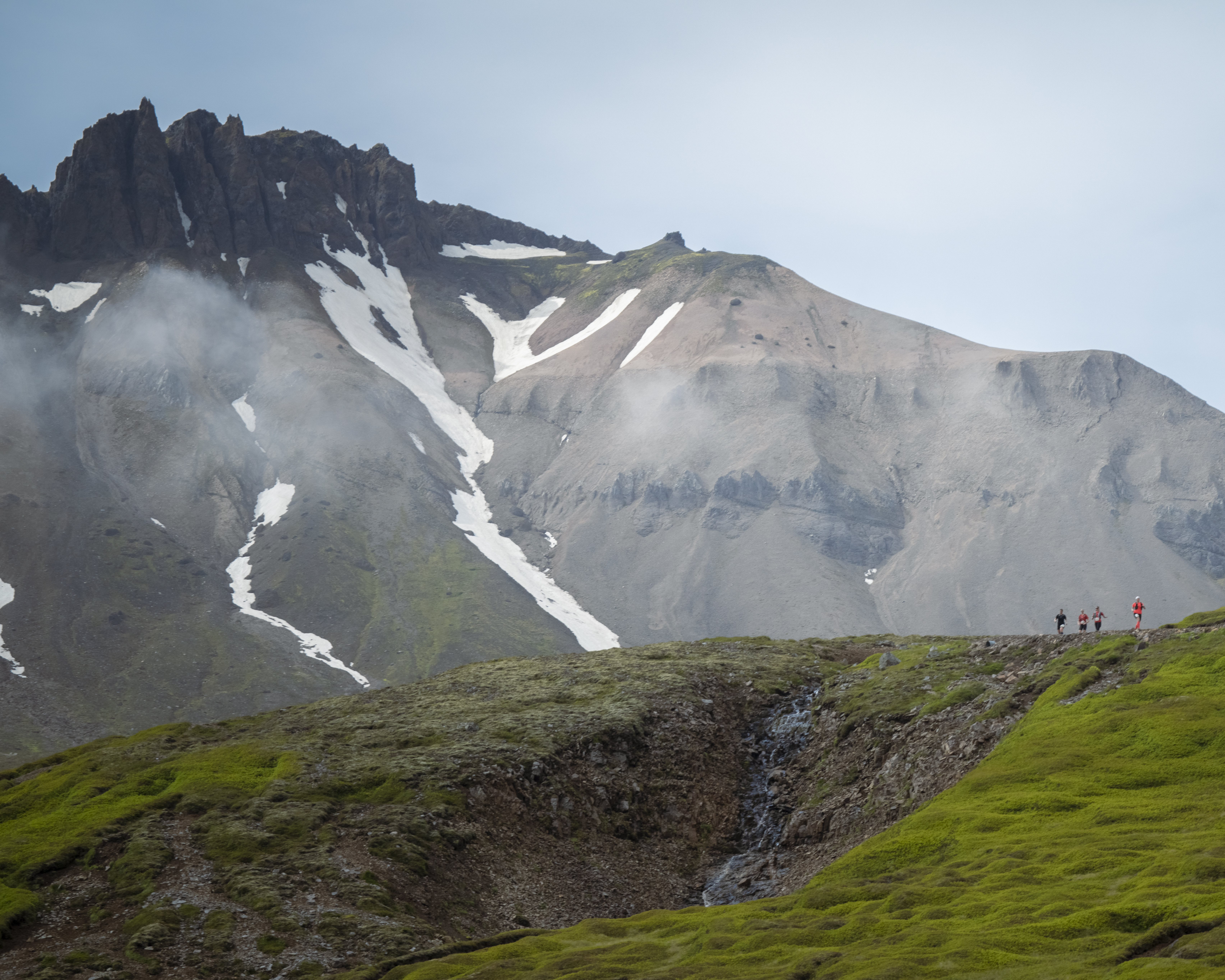 Photographer: Þrosteinn Roy
How Many Years Has Dyrfjallahlaupið Been Going?
Dyrfjallahlaupið first took place in 2017. The local community organized it to mark the 100th anniversary of UMFB, the local youth association. The race has been held every summer since, staying deliberately small and community run.
There are no big sponsors, no large production crews, and no commercial finish line. A team of around 35 volunteers from the local rescue team handles trail safety on race day.
How Many People Run Dyrfjallahlaupið?
Close to 250 runners took part in the 2025 race, coming from both Iceland and other countries. The event has grown steadily since its first edition, yet it remains one of the smaller trail races on the Icelandic calendar.
The Route
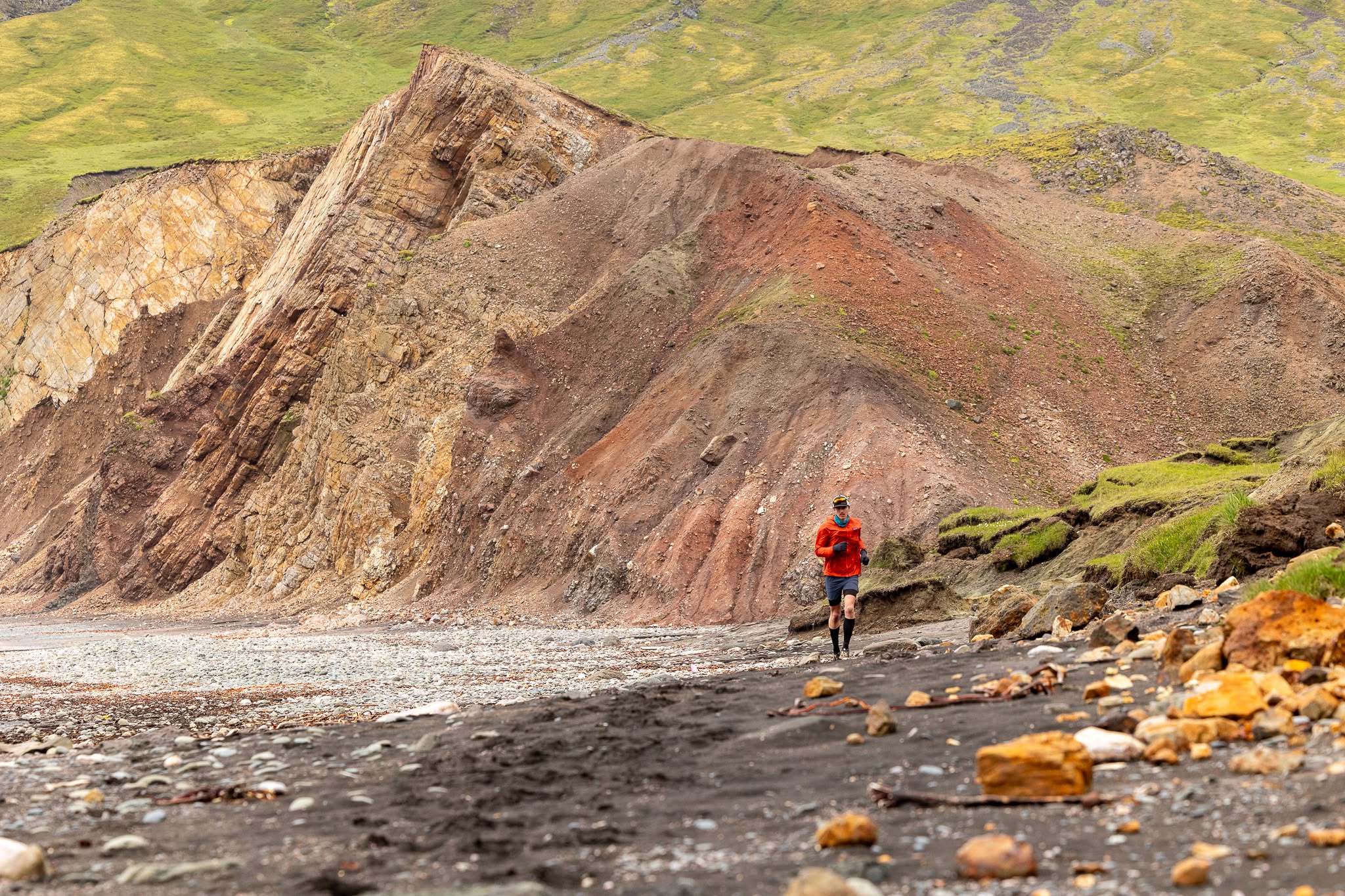
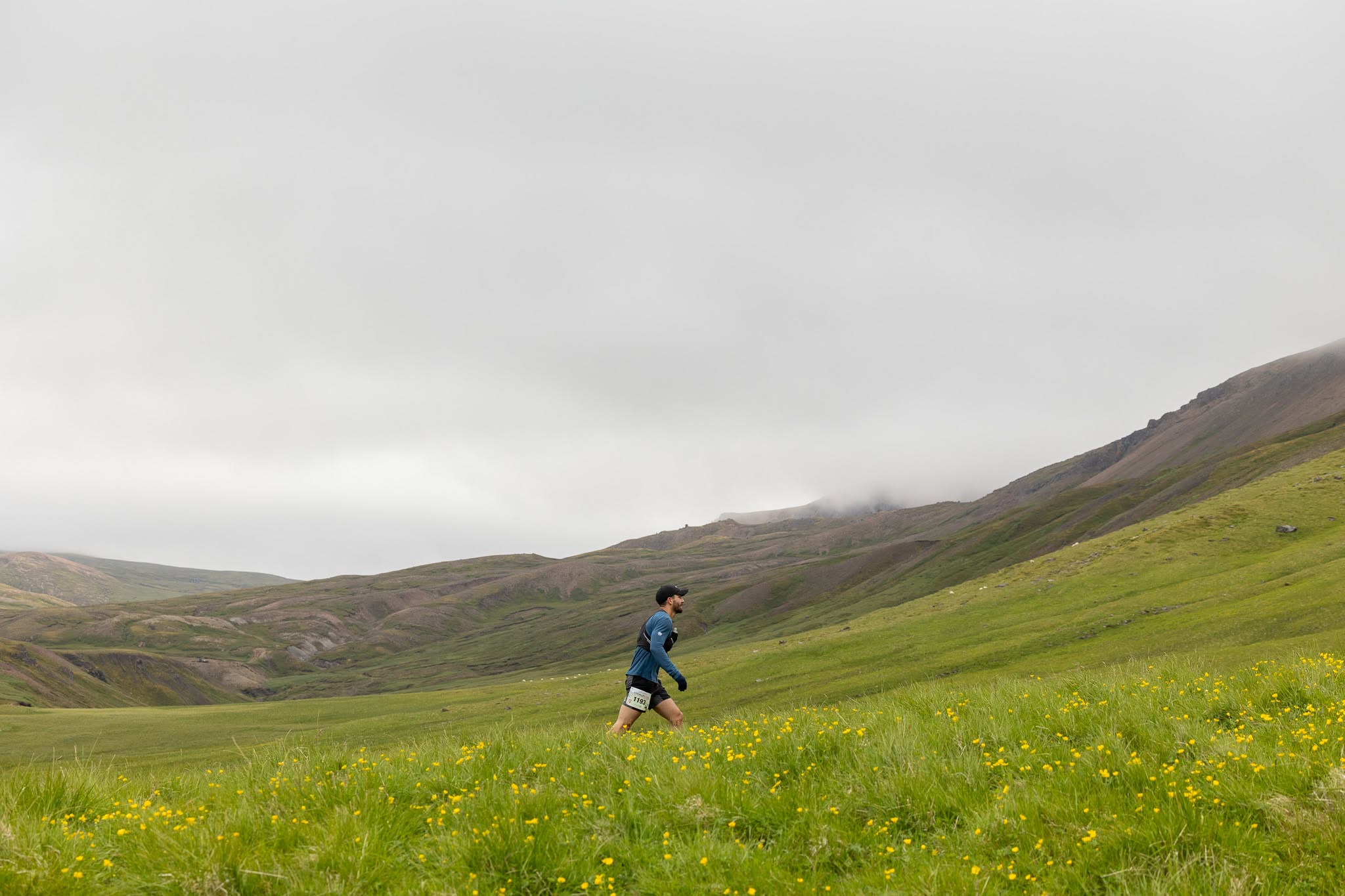
Most of the course is non technical but uneven. Expect rocky sections, grassy trails, loose scree on some climbs, and occasional river crossings.
Key Highlights
- Stórurð: This boulder field east of Borgarfjörður covers several hectares of house sized rocks deposited by ancient rockslides. Runners on the 24 km (14.9 miles) and 50 km (31 miles) routes pass through it at a point in the race where the scale of the landscape tends to stop people mid-stride. There is nowhere else on the Icelandic race circuit that looks or feels like it.
- Dyrfjöll mountains: The sharp twin peaks of Dyrfjöll rise to 1,136 m (3,727 ft) and stay visible from nearly every point on all three courses. They act as a constant landmark that runners can track throughout the race.
- Brúnavíkurskarð pass: All three distances share this steep climb to 354 m (1,161 ft). It is the last major effort before the trail drops down to the coast and the harbor finish.
- Húsavík and Breiðuvík inlets: These remote coastal bays appear only on the longer routes. There is no road access to either location, and outside of race weekend, very few people ever reach them on foot.
What Is the Weather Like?
Race day falls on 4 July 2026, but July in Borgarfjörður Eystri does not guarantee warm or dry conditions. Temperatures typically range from 46°F (8°C) to 59°F (15°C), and wind or rain can arrive without warning at any point during the race. The passes above 300 m (984 ft), including Brúnavíkurskarð, can be foggy, cold, and gusty even on a clear summer morning.
What to Pack?
Packing the right gear matters on all three routes. Here is what to bring:
- Trail running shoes with good grip
- Waterproof jacket that blocks wind and rain
- Base layer suited to 46°F to 59°F (8°C to 15°C)
- Hydration pack or vest
- Energy food for longer distances
- Map or GPS device for the 50 km (31 miles) route
- First aid basics, including blister care and a survival blanket
Train on uneven ground before race day. Road running fitness helps, but the course also requires hill repeats and practice on rough terrain.
How Do You Get There?
Getting to Borgarfjörður Eystri requires planning. Here are the main travel options from Reykjavík:
- By plane: Flights from Reykjavík Domestic Airport to Egilsstaðir run daily and take about one hour and five minutes. From Egilsstaðir, drive Route 94 north to Borgarfjörður Eystri.
- By car: The drive from Reykjavík takes around eight hours (674 km) via the Ring Road (Route 1). Turn onto Route 94 north of Egilsstaðir.
- By bus: Scheduled buses connect Egilsstaðir with larger towns, but there is no regular public transport to Borgarfjörður Eystri. A rental car or taxi from Egilsstaðir is the standard option.
Where Can You Stay Near Borgarfjörður Eystri?
Borgarfjörður Eystri has Blábjörg Resort, Álfheimar Country Hotel, hiking lodges, and a campsite open from mid May to the end of September. Rooms fill quickly around race weekend, so book early. Egilsstaðir has additional hotels if village accommodation is full.
Why It's Worth Running
Dyrfjallahlaupið stands apart from larger races for its remote terrain, mountain scenery, and genuine community atmosphere. The stretch through Stórurð is what many participants remember most. At the finish line, local families, volunteers, and race staff are all mixed together in the same small harbor space.
There is no stage, no MC, and no sponsor backdrop. Finishers collect their meal and sit with whoever is nearby, which tends to produce the kind of conversation that does not happen at bigger events.
The Kind of Race You Come Back For
Dyrfjallahlaupið is one of the few races in Iceland where the terrain, the scenery, and the setting all feel genuinely remote. Whether you run 12 km (7.5 miles) or the full 50 km (31 miles) Ultra, the Dyrfjöll mountains and Víknaslóðar trails make for a course that is hard to forget.
Give yourself a day or two around race weekend to explore the area. There are plenty of other trails worth hiking nearby if you arrive early, puffins are active at Hafnarhólmi through July, and the village pace is slow enough to actually feel like a rest.

Is there a time limit for Dyrfjallahlaupið?
The 50 km (31 miles) Ultra has a time gate at 30 km (18.6 miles) that runners must reach within five hours. The 12 km (7.5 miles) and 24 km (14.9 miles) routes do not have a published time cut.
Can I get a refund if I cancel my Dyrfjallahlaupið registration?
Refunds are only available if you cancel at least 30 days before race day. After that deadline, no refunds are given. If you cannot attend, name changes to race entries are allowed for free until race day.
How do I register for Dyrfjallahlaupið?
Registration is available through netskraning.is, the official registration platform for the event. Sign up early, as spots fill ahead of race day.
Is Dyrfjallahlaupið suitable for beginners?
The 12 km (7.5 miles) route is accessible to fit beginners and confident hikers. The 24 km (14.9 miles) and 50 km (31 miles) routes are better suited to runners with trail and hill experience.
What is the terrain like on the course?
The course includes jeep tracks, hiking paths, open moorland, river crossings, and steep mountain passes. The ground is uneven throughout, with rocky and grassy sections on all three distances.