
Hiking Trails in East Iceland: Coastal Paths and Mountain Peaks

Hiking Trails in East Iceland: Coastal Paths and Mountain Peaks
Hiking in East Iceland means fewer tourists on the trails. While over 5,000 visitors daily
pack the Golden Circle, hiking trails here see only a handful of people. You'll walk past
waterfalls that drop 128 meters and watch puffins from wooden platforms at Hafnarhólmi.
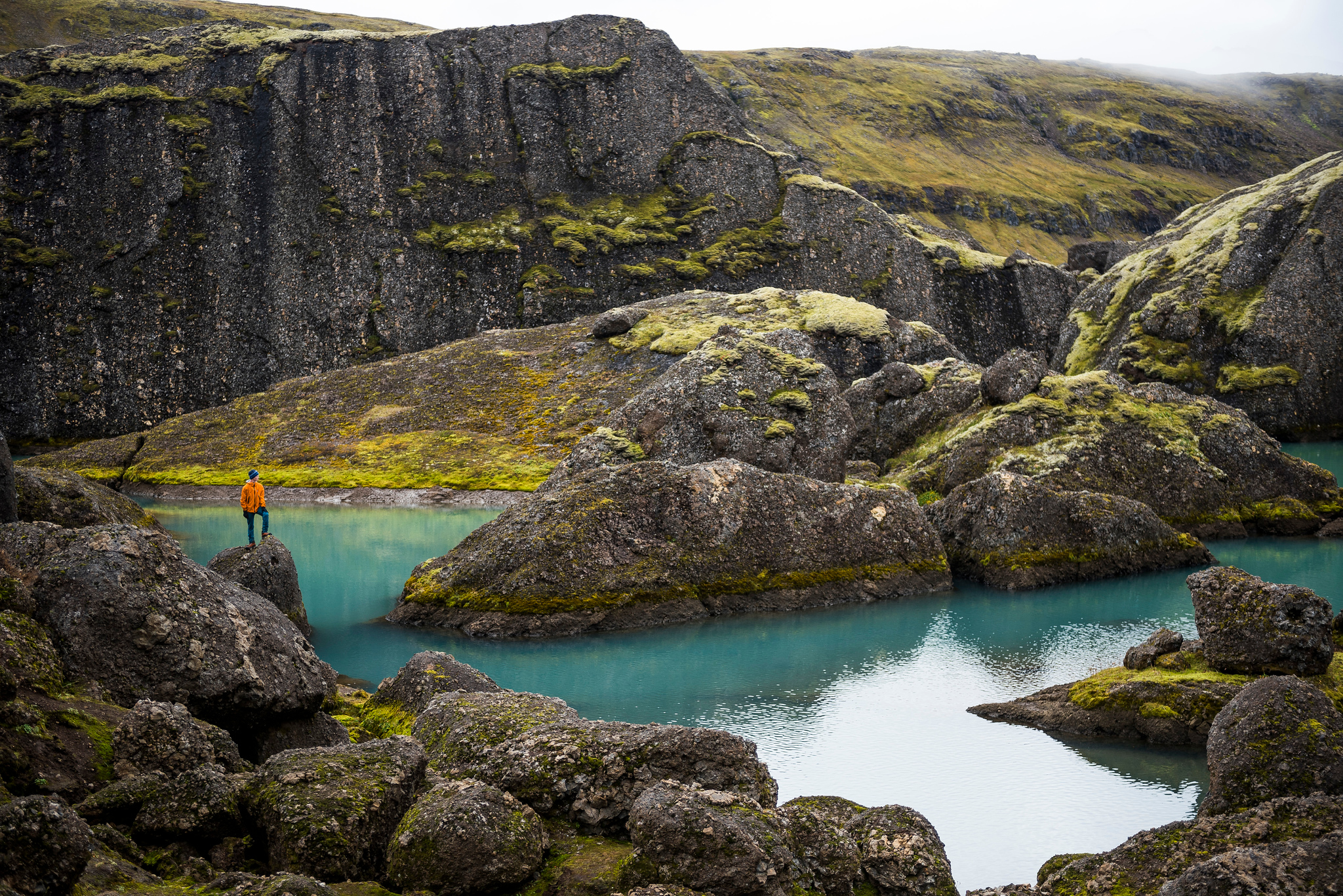
Climb to bright blue ponds surrounded by house-sized boulders at Stórurð.
Some routes take an hour, others need a full day. All of them offer solitude and wide-open
fjord views. Check trail conditions, grab your hiking boots, and discover Iceland's quietest
trails.
Overview of Hiking in East Iceland
East Iceland is away from the main tourist areas, so its trails stay empty even in summer.
The views change from one valley to the next. Around Borgarfjörður Eystri, the sharp
Dyrfjöll mountains stand next to waterfalls like Hengifoss, while deep fjords surround
villages like Djúpivogur. Most trails don't need permits, and many are easy to follow.
Before you head out, know two things. The region's weather changes fast, so come
prepared with layers and waterproof gear. Iceland's moss grows slowly on volcanic rock and
takes 50 to 100 years to recover if crushed, so always stick to marked paths.
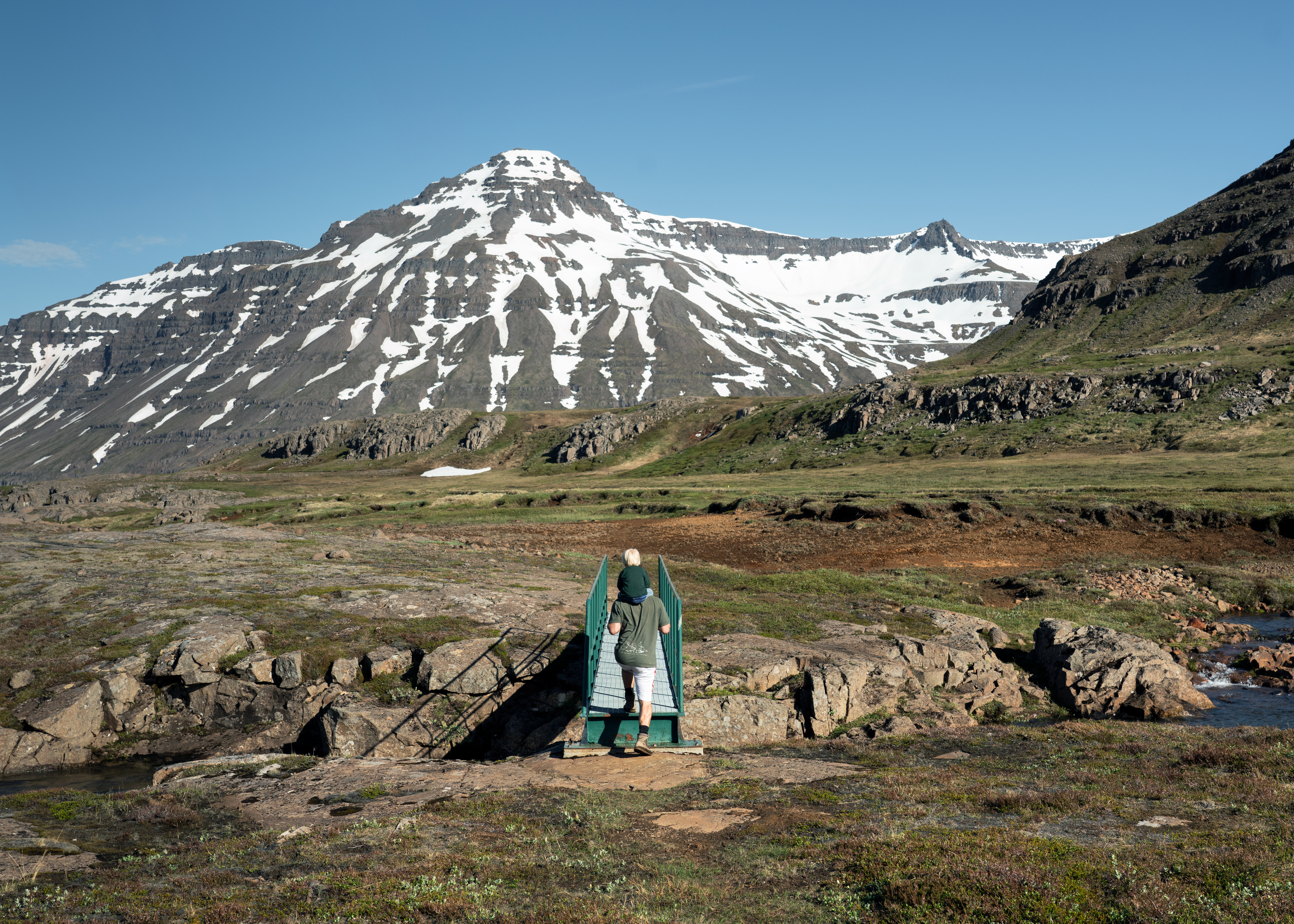
Photographer: Jessica Auer
Borgarfjörður Eystri: The Hiking Capital of the East
Borgarfjörður Eystri is a fishing village at the end of Road 94, with the sharp Dyrfjöll
mountain peaks rising to 3,727 feet (1,136 meters) behind it. Over 40 trails start from this
village and cross the rugged mountains, making it the hiking capital of East Iceland. The
Víknaslóðir trail network connects empty coves, red and orange ridges, and green valleys
with old farm ruins.
The hike to Brúnavík is the best-known trail here, leading to a black-sand beach between
tall cliffs. Two routes reach the beach:
Shorter route (from Borgarfjarðarhöfn carpark):
● Difficulty: Moderate
● Length: 5 miles (8 km) round-trip
● Elevation gain: 1,181 feet (360 m)
● Time: 3.5 to 5.5 hours
Longer route (from Bakkagerði):
● Difficulty: Moderate to Difficult
● Length: 8-9 miles (13-15 km) round-trip
● Elevation gain: 1,300–2,283 feet (400–696 m)
● Time: About 5 to 7 hours
Both trails are marked with yellow posts. The beach is usually empty.
Not all trails require a full day. Shorter walks leave from the village center. The path to
Urðarhólar takes about an hour and goes through hilly terrain with birdlife and wildflowers.
You can see the fjords and colorful mountain peaks from the trail.
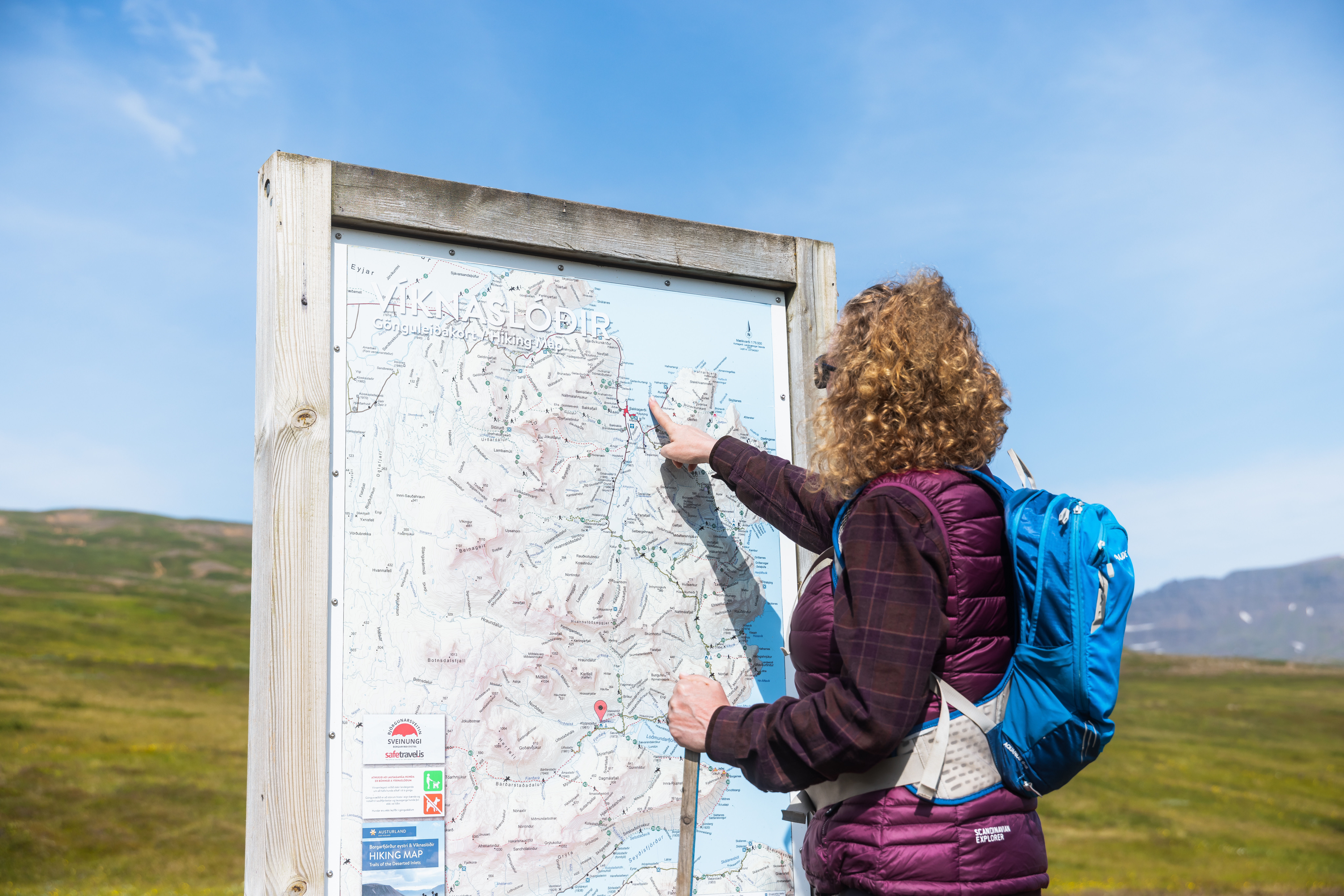
Photographer: Þráinn Kolbeinsson
The Basalt Layers of Hengifoss
Hengifoss is Iceland's third-tallest waterfall, dropping 420 feet (128 meters) over layers of
red clay and black basalt. The bands of color show alternating volcanic eruptions and
periods of calm. The trail to Hengifoss begins near Lagarfljót Lake, about 30 minutes from
Egilsstaðir. Parking fills quickly on sunny days.
Trail stats:
● Difficulty: Easy to Moderate
● Length: 3.1 miles (5 km) round-trip
● Elevation gain: 922 feet (281 m)
● Time: 2 to 3 hours
Halfway up, you'll pass Litlanesfoss, where basalt columns frame the cascade like organ
pipes. The path is well-maintained but gets slick after rain, so wear boots with good grip.
Good boots are essential for hiking in East Iceland.
At the top, a wooden platform gives you clear views of Hengifoss and the striped cliff
behind it. The wind up here can knock you sideways, so hold on to your hats and cameras.
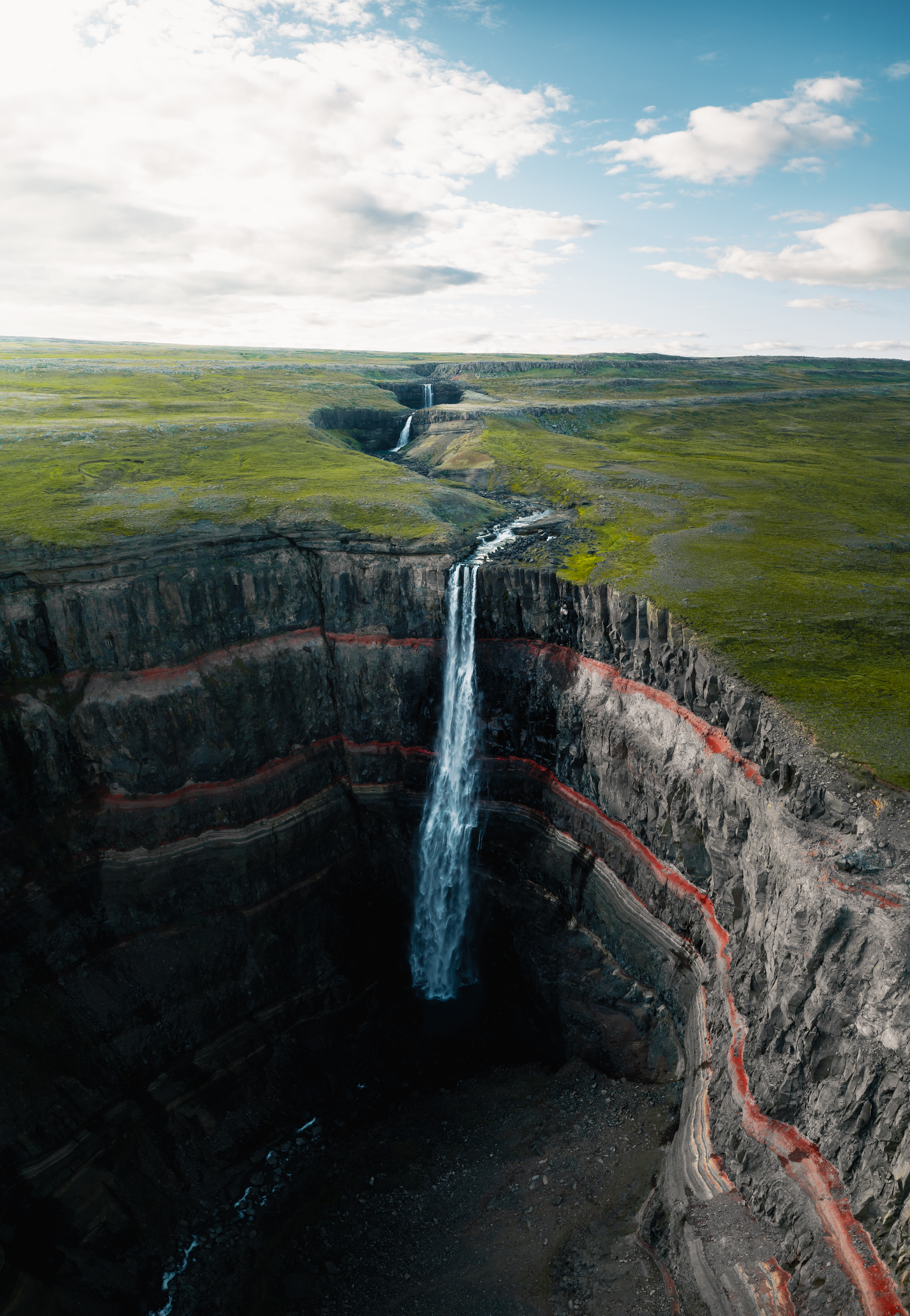
Photographer: Þráinn Kolbeinsson
Coastal Walks and Puffin Spotting at Hafnarhólmi
Hafnarhólmi is a rocky point just outside Borgarfjörður Eystri, where thousands of Atlantic
puffins nest each summer. Wooden platforms take you within a few meters of the burrows
without disturbing the birds. Puffins arrive in mid-April and stay through mid-August. They
sometimes waddle right up to the railings.
The walk from the village to Hafnarhólmi takes 30-40 minutes on flat ground. You'll share the
path with:
● Eider ducks nesting along the shore
● Arctic terns diving for fish
● Occasional Arctic foxes hunting for easy meals
● Razorbills and guillemots on the cliff ledges
Beyond birdwatching in East Iceland, Hafnarhólmi is also the starting point for several
longer coastal routes. The path north along Héraðssandur black sand beach is a two-hour
walk and ends at Stapavík, an inlet with old loading docks and tall sea cliffs.

Photographer: Gunnar Freyr Gunnarsson
Blue Ponds of Stórurð
Stórurð is a boulder field of giant rocks with bright blue pools at 1,312 feet (400 meters)
high. Rocks as big as houses sit around the pools, surrounded by the steep walls of Dyrfjöll.
Glaciers left these rocks behind, and melting snow fills the pools, giving them their
blue-green color from glacier minerals. Five different trails go here, but most hikers start
from Vatnsskarð pass.
Trail stats (from Vatnsskarð):
● Difficulty: Moderate to Difficult
● Length: 9.3 miles (15 km) round-trip
● Elevation change: 2,231 feet (680 m)
● Time: 4.5 to 6 hours
The trail climbs steadily at first, then drops into the boulder field. The path is hard to see
among the rocks, so follow the yellow markers carefully.
Because Stórurð sits above 1,312 feet (400 meters), snow can block access until late July.
Early-season hikers should check conditions before setting out.
Scaling Búlandstindur
Búlandstindur is a pyramid-shaped mountain that stands 3,507 feet (1,069 meters) above
Djúpivogur. Locals call it a sacred mountain. The trail is clear but steep.
Trail stats:
● Difficulty: Difficult
● Length: 3.7 miles (6 km) round-trip
● Elevation gain: 3,281 feet (1,000 m)
● Time: 3 to 4 hours to summit
Check the weather before you go because clouds can come in fast and hide the trail. On
clear days, you can see the fjords and the ocean from the top. The last part needs you to
climb over loose rocks. Hiking poles help you stay balanced, and gloves protect your hands
from sharp rocks.
Photographer: Ragnhildur Aðalsteinsdóttir
Forest Trekking in Hallormsstaðaskógur
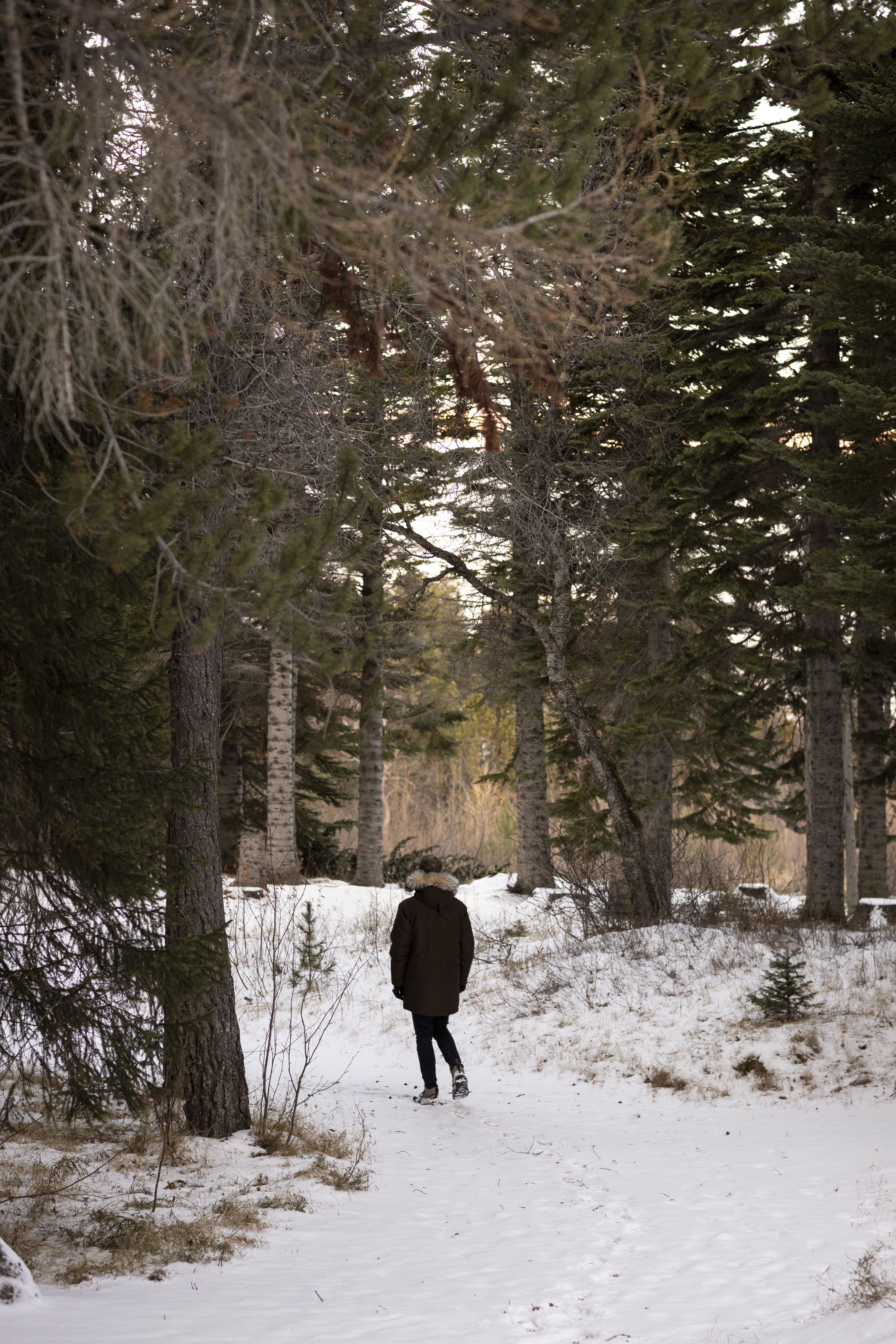
Hallormsstaðaskógur spreads across the shores of Lagarfljót Lake, Iceland's largest forest.
It's a rare sight in a country where trees grow sparse. Planted pines and native birches
create a canopy that shelters walkers from wind and rain. The trails here are flat and gentle,
perfect for families or bad weather days.
Trail overview:
● Difficulty: Easy
● Length: Multiple loops from 1.2 miles (2 km) to 6.2 miles (10 km)
● Elevation gain: Minimal (mostly flat)
● Time: 30 minutes to 3 hours, depending on the loop
Main trails:
● Bjargselsbotnar trail: Climbs to an ancient landslide
● Atlavík path: Follows the lakeshore with calm water views
● Arboretum walk: Short loop through planted tree species
All trails are clearly marked at each junction. In autumn, the birch trees turn gold. In winter,
snow covers the forest. The trails stay sheltered from wind year-round, unlike the exposed
mountain peaks.
Safety Tips for East Iceland Hiking
Icelandic weather shifts without warning. A calm morning can turn into heavy rain by noon.
Pack smart for any hiking trails in the region:
Essential gear:
● Waterproof jacket and pants
● Warm layers (fleece or wool)
● Offline maps downloaded to your phone
● Emergency contact informed of your plans
● Extra food and water
● First aid kit and whistle
Cell service covers most main trails, but deep valleys and remote fjords can lose signal.
Download offline maps before you head out. Let someone know your plans, especially for
longer or more isolated routes.
If visibility drops on exposed peaks, turn back. Getting caught in fog with no landmarks is
dangerous. Most search-and-rescue calls in the East Fjords area involve people who pushed
on when they should have turned back.
Watch your footing near cliff edges and sea cliffs. Respect private property and stick to
marked paths. Following Leave No Trace principles is essential for hiking in East Iceland.
Best Time of Year for Hiking the East
East Iceland's hiking season runs from mid-June through September, though trail access
and conditions vary by elevation and season.
Summer (mid-June to August)
Peak season with the warmest weather and best trail conditions. Most trails open by late
June, but high-elevation routes aren't fully accessible until July or August. Nearly 24
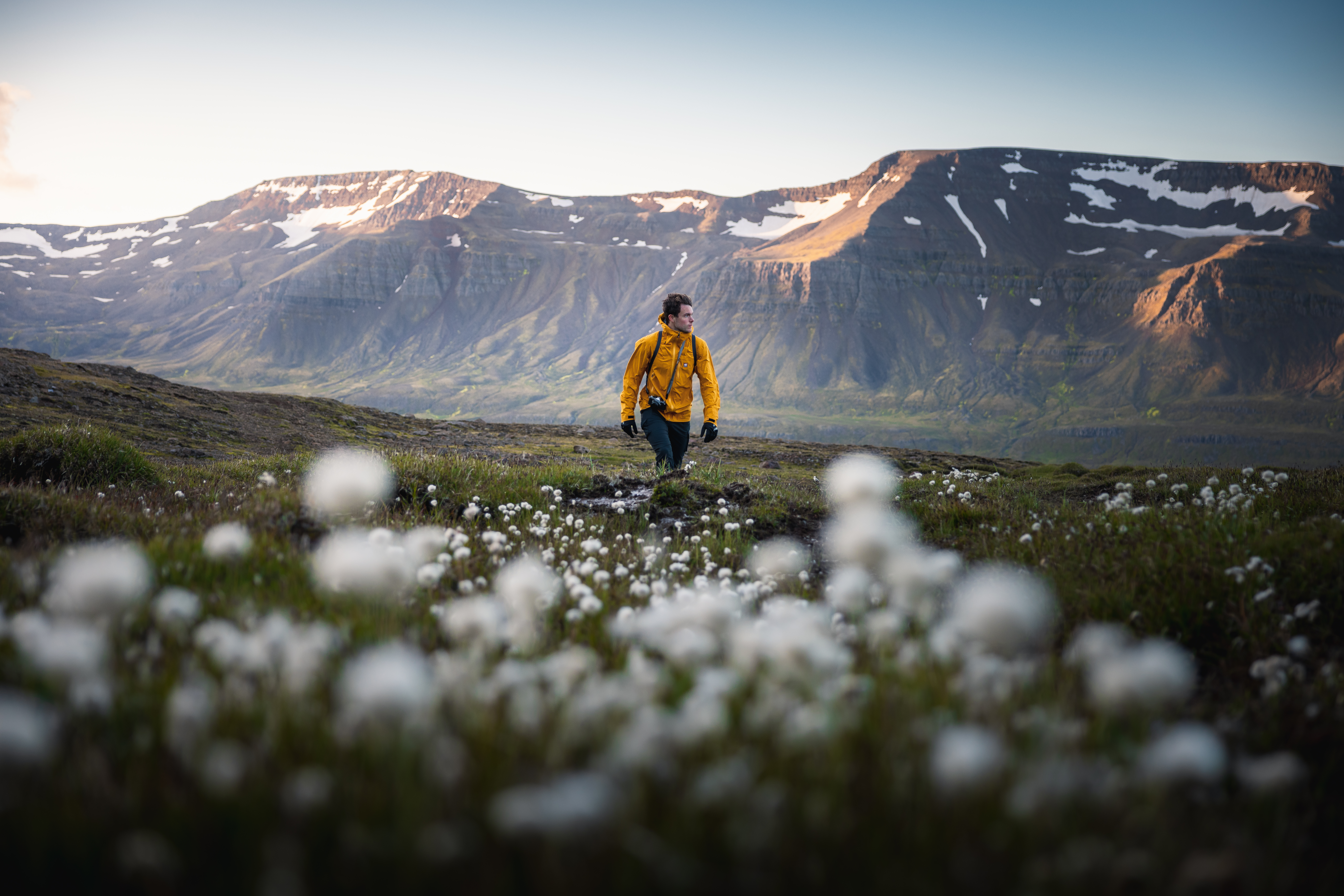
hours of daylight let you hike on your own schedule. Wildflowers bloom across valleys, and
temperatures reach 54°F-68°F (12°C-20°C). Puffins leave by mid-August.
Autumn (September)
Brings gold birch forests and fewer hikers on the trails. Weather becomes less predictable,
and snow can appear on high trails by late September. Northern lights start appearing after
dark.
Winter (October-May)
Limits you to forest and coastal trails. Avalanche risk closes mountain routes, and ice blocks
most paths. The region sees very few tourists, and winter light is good for photography.
Spring (April-May)
The trickiest season. Snowmelt creates muddy trails, and mountain passes stay blocked
until late June or early July, depending on snowfall. Call local information centers for
current trail conditions before planning spring hikes.
Plan Your East Iceland Hiking Adventure
Hiking in East Iceland offers quieter trails and far fewer crowds than the rest of Iceland.
You'll find empty beaches, mountain peaks with wide fjord views, and trails where you
might be the only hiker.
From watching puffins at Hafnarhólmi to climbing Búlandstindur or hiking through the
boulder field at Stórurð, these trails take you away from the busy Golden Circle route. Pack
your gear, check the weather, and head east.
Photographer: Þráinn Kolbeinsson
FAQs About Hiking Trails in East Iceland
1. Are the hiking trails in the East well-marked?
Most popular routes, like Hengifoss and Stórurð, are well-marked, but remote coastal paths
may require a GPS or a map.
2. How difficult is the hike to Stórurð?
It is considered a moderate-to-difficult hike due to its length and rocky terrain, but the
views of the blue ponds are worth the effort.
3. Can I see puffins while hiking?
Yes, specifically at Hafnarhólmi in Borgarfjörður Eystri, where you can walk right up to safe
viewing platforms.
4. What should I do if the weather changes mid-hike?
Icelandic weather shifts fast; always carry a waterproof layer and turn back if visibility drops,
as the peaks are very exposed.
5. Are there any flat, easy walks in the East?
The trails through Hallormsstaðaskógur forest offer flatter, sheltered paths that are perfect
for families or windy days.
6. Do I need permits to hike in East Iceland?
No permits are required for day hikes, but always stick to marked paths to protect the
fragile moss and vegetation.
7. Is there cell service on the mountain trails?
Service is generally good on the main trails, but it can be spotty in the deep valleys and
remote fjords.