
Hygge in East Iceland: Embracing Cozy Local Life and Traditions

Hygge in East Iceland: Embracing Cozy Local Life and Traditions
In the quiet fjords of East Iceland, warmth comes from more than fire and wool. This is where Hygge in Iceland takes its most authentic form, shaped by long winters, close-knit communities, and a rhythm that follows the seasons. While Denmark gave the concept its name, people in the East have lived this way for generations. They simply call it home.
Ready to discover how locals embrace the cozy life? Let's explore the traditions that make winter in East Iceland truly special.
What is Hygge?
Hygge is a Danish word meaning "feeling cozy and happy together." It's about candles on dark afternoons, hot drinks with friends, and staying warm inside during storms.
In East Iceland, this feeling runs deep. It mirrors the local saying "þetta reddast" (everything will work out), both born from surviving hard winters by finding light in the dark. It's about being present: knitting by a window, sharing stories over coffee, embracing the moment.
The Importance of the Local Swimming Pool
Every eastern village has geothermal-heated swimming pools. The hot tub is where locals gather year-round to talk, relax, and connect.
- Neighbors chat about life while soaking in naturally hot water
- Kids play while grandparents relax nearby
- Geothermal energy heats the water straight from the earth
- Swimming in 38°C water during a snowstorm is pure hygge
Pools open early and close late. Locals visit before work and after dinner. This is where friendships grow, and newcomers become neighbors.
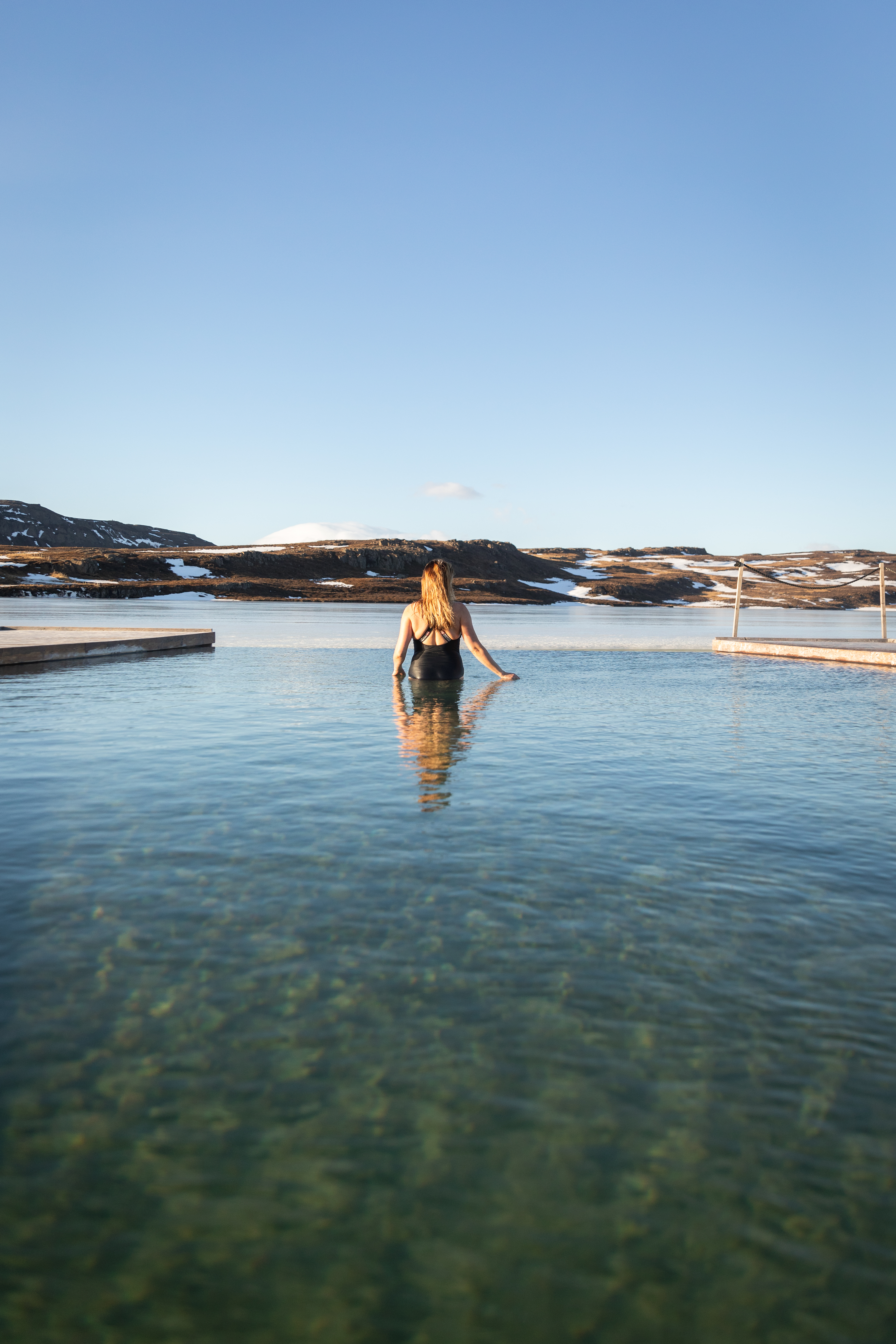
Photographer: Gunnar Freyr Gunnarsson
Cozy Cafes and Community Hubs in the East Fjords
Small cafes dot the eastern towns. In Egilsstaðir, Seyðisfjörður, and Neskaupstaður, they serve coffee, shelter from the weather, and conversation with locals. Order a Kleina with hot coffee. These twisted Icelandic doughnuts appear in every bakery, made fresh each morning. There are many cozy cafes and restaurants in East Iceland where you can experience the local cuisine created from old family recipes.
What makes these cafes special:
- Warm and softly lit in winter, perfect for staying awhile
- No rush. Locals sit for hours over one cup of coffee
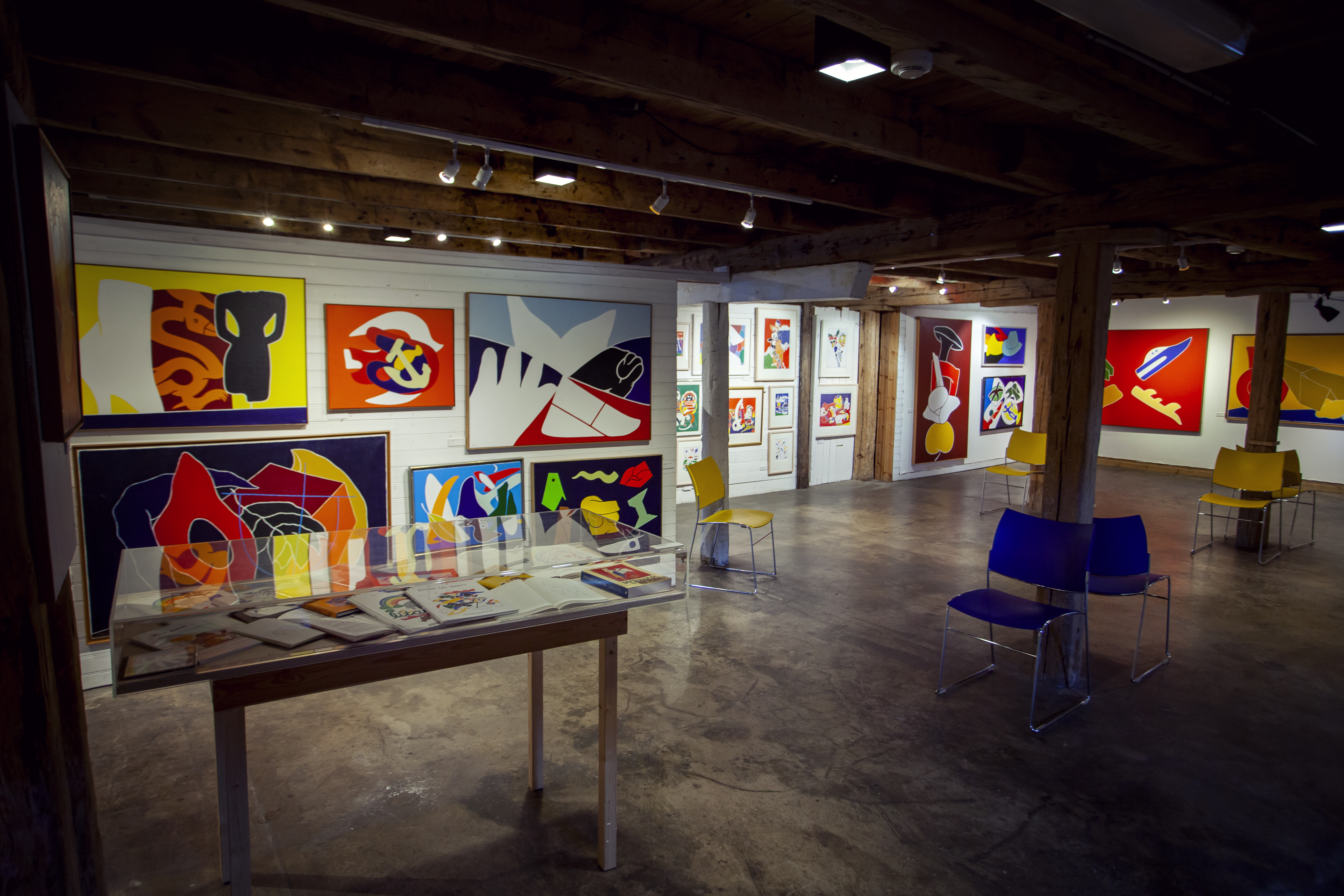
- Show local art and hold small concerts
- Work in libraries or craft shops too, meeting different needs
- Turn into meeting spots during festivals and safe places during storms
The Dark Season rituals
Winter darkness arrives early in the East. By December, daylight lasts 4-5 hours. Locals adapt through daily rituals.
How locals live with the darkness:
- Candles replace electric lights
- Dinner at 6 PM
- Evenings for games, reading, or talking
- Northern Lights viewing becomes a group activity
- Early to bed, embracing the season of rest
Because light pollution is minimal in the East, you can often see auroras right from your guesthouse window. Neighbors text each other when Northern Lights appear, and people step outside together to watch.
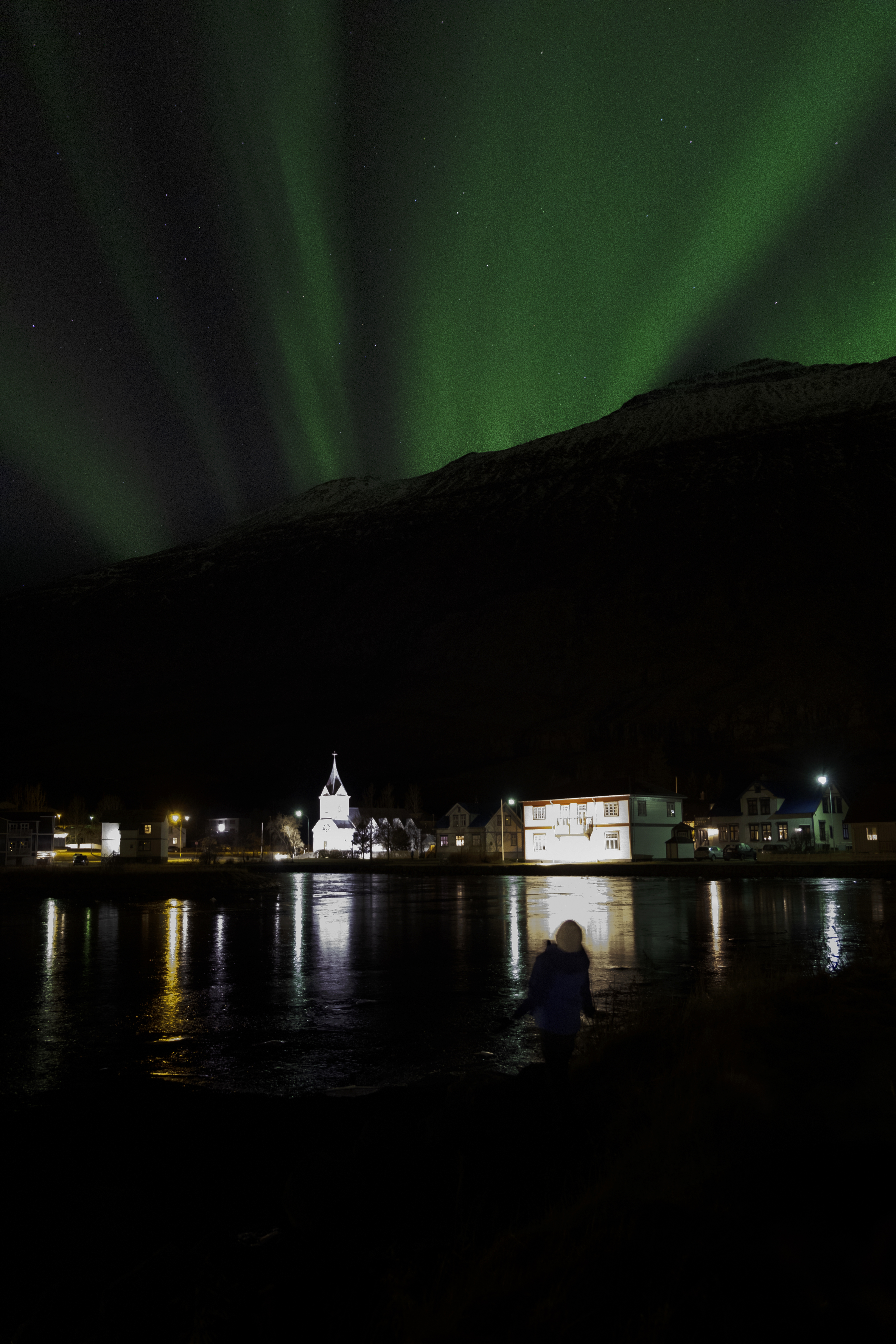
Photographer: Ingvi Örn Þorsteinsson
Icelandic Wool and Knitting
Sheep outnumber people in East Iceland. Their wool has two layers: soft inside, waterproof outside. In Egilsstaðir and Seyðisfjörður, you can buy sweaters made by local knitters using local wool.
The lopapeysa (Icelandic sweater) features a round yoke pattern that has become Iceland's trademark design. Knitting groups meet weekly at community centers and welcome visitors. You'll hear needles clicking and quiet conversation.
Every home has these sweaters. They're winter basics and gifts. When you buy one from a local knitter, you support a craft that's over 1,000 years old.
Storytelling in Local Life
Iceland's storytelling tradition goes back to the sagas. In the East, this continues through winter gatherings.
Libraries and community centers anchor village life. Book clubs meet in small reading rooms. Kids come for story time. A great place to learn more about the storytelling of Icelandic sagas and culture is at Skriðuklaustur, in East Iceland.
People share stories over coffee in hot tubs or natural hot springs. They talk about their days, worries, and joys. This simple act of listening and being heard creates the togetherness that defines hygge.
How to Spend a Rainy Day in East Iceland
Rain falls sideways in the East, driven by fierce winds. These days call for indoor activities and slow comfort.
Perfect rainy day activities:
- Start at a local bakery: Grab a kleina and coffee by a window seat
- Visit small museums: Explore local history, maritime heritage, and minerals
- Explore cave formations: If conditions allow (always check locally, safetravel.is)
- Rest at your accommodation: Light candles, make tea, and relax
- End at the swimming pool: The contrast between cold rain and hot water feels extraordinary
Living Hygge in East Iceland
Experiencing Hygge in Iceland's eastern fjords means slowing to the local pace, enjoying simple pleasures, and finding warmth in community. It's not something you watch from outside. It's something you do, breath by breath, cup by cup, story by story.
Winter in East Iceland doesn't rush. It waits, welcomes, and wraps you in wool and firelight. That's hygge at its truest, not a trend, but a way of being fully present in the long, beautiful dark.
FAQs About Hygge in East Iceland
1. How do locals stay cozy during the long winters?
The focus is on "gluggaveður" (window weather). Enjoying the view of a storm from the safety of a warm, candle-lit room.
2. What is the best local snack for a hygge afternoon?
A "kleina" (Icelandic doughnut) paired with a hot coffee is the classic choice for a cozy break.
3. Are the swimming pools a social place?
Absolutely; the "heitur pottur" (hot tub) is where locals meet to discuss news and relax, regardless of the weather.
4. Where can I buy an authentic Icelandic sweater?
Look for local hand-knitting associations in towns like Egilsstaðir or Seyðisfjörður for sweaters made from local wool.
5. What is a traditional winter meal in the East?
Hearty lamb stews and fresh fish are staples that provide comfort during the colder months.
6. Do villages have libraries or community spaces?
Most villages have small, cozy libraries and "Herðubreið" community centers that serve as the heart of local life.
7. Can I experience the Northern Lights from the villages?
Yes, because there is so little light pollution in the East, you can often see the northern lights right from your guesthouse window.