Skip to content

Or try searching by Category and/or Location

The Fjord Way Explore

Hafnarhólmi
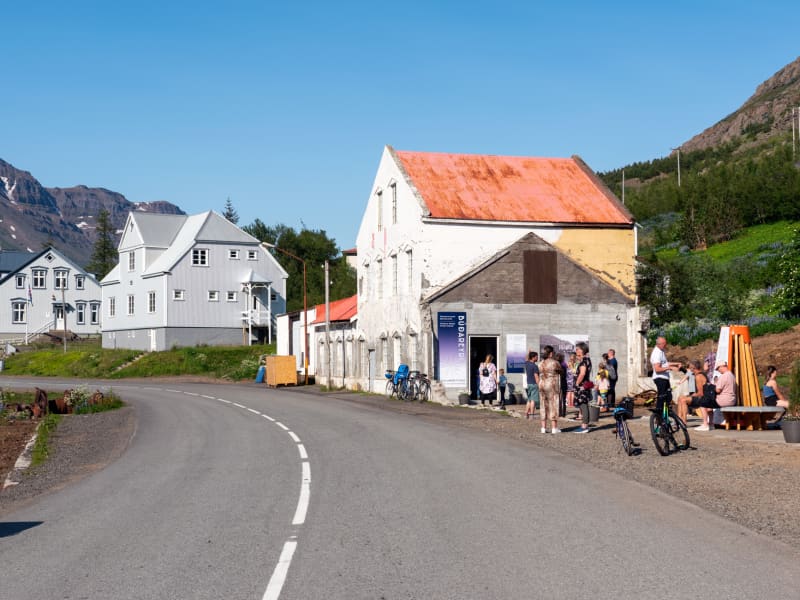
Hafnarhólmi islet at the harbour in Borgarfjörður Eystri is perfect for birdwatching. Hafnarhólmi is easily the most accessible Atlantic Puffin colony in Iceland where they nest every year from middle of April to beginning of August. Kittiwakes, Fulmar and Common Eider also nest in Hafnarhólmi along with many other bird species. Locals have taken care of Hafnarhólmi and its birds for decades and built it up to be easily accessible for visitors to enjoy the area in harmony with the wildlife there. At the newly built Hafnarhús - Harbour House you can enjoy art exhibitions and excellent view over the harbour and Hafnarhólmi while tasting some Icelandic delicacies. 
Álfaborg
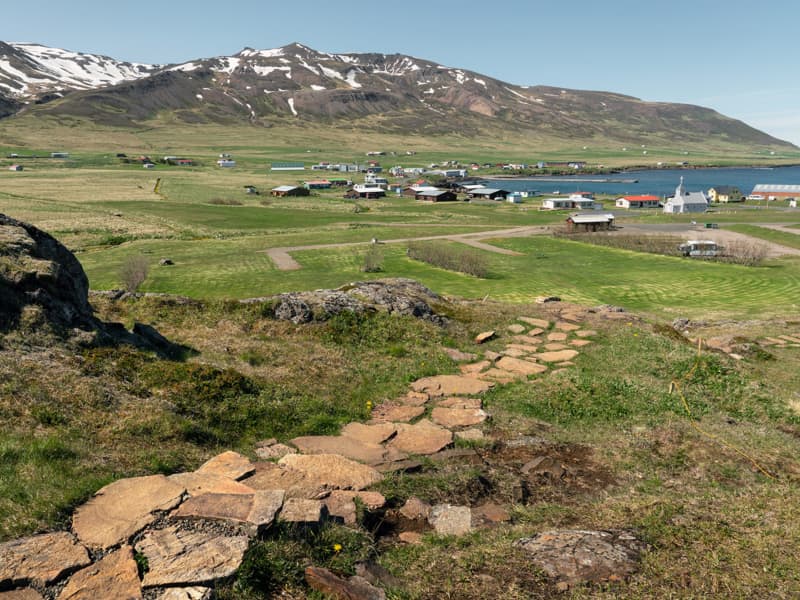
On arrival to Borgarfjörður Eystri, you will se a distinctive landmark in the middle of the village; Álfaborg, or The city of Elves, where the Queen of Elves lives, legend tells. Numerous tales tell of relations between elves and locals, such as young women marrying elvish men and living in Álfaborg. Álfaborg was declared a nature reserve in 1976, which makes the area protected for recreational and public use. On top of Álfaborg is an observation platform with excellent view over the fjord and surrounding mountains. The trail up Álfaborg is an easy walk and suitable for all. Below Álfaborg is the local camping ground and a fresbee golf course.
Dyrfjöll
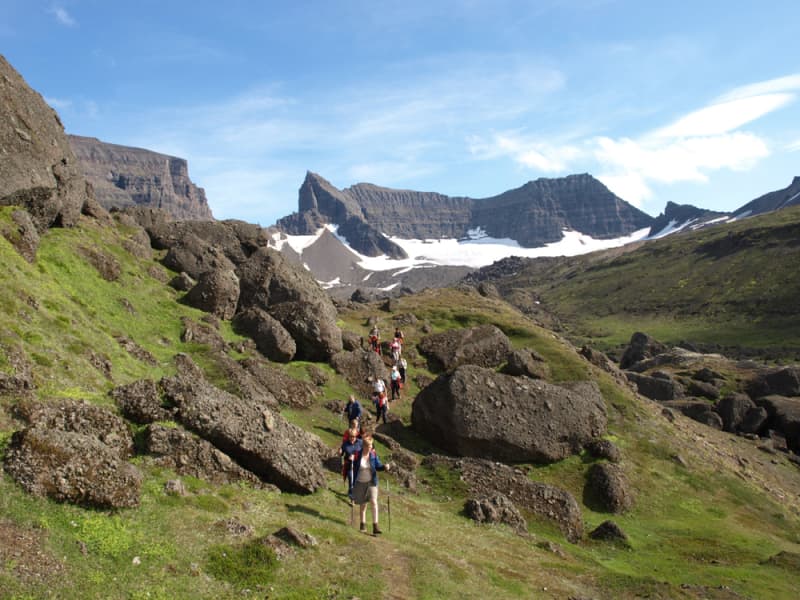
The magnificent 1136 high mountain range Dyrfjöll near Borgarfjörður Eystri draws its name from the iconic "door" in the middle of the range. Its shape is very different from many other mountains in Iceland with steep vertical valls and the big door-like gap (856 m high) in the middle. Dyrfjöll is an old volcano formed during or before the last Ice age.  The hiking trail up the ridge is very diverse with untouched mossy areas, clear pools and glacier landscapes but only suitable for experienced hikers under guidance. The view from the top is breathtaking.  
Gufufoss
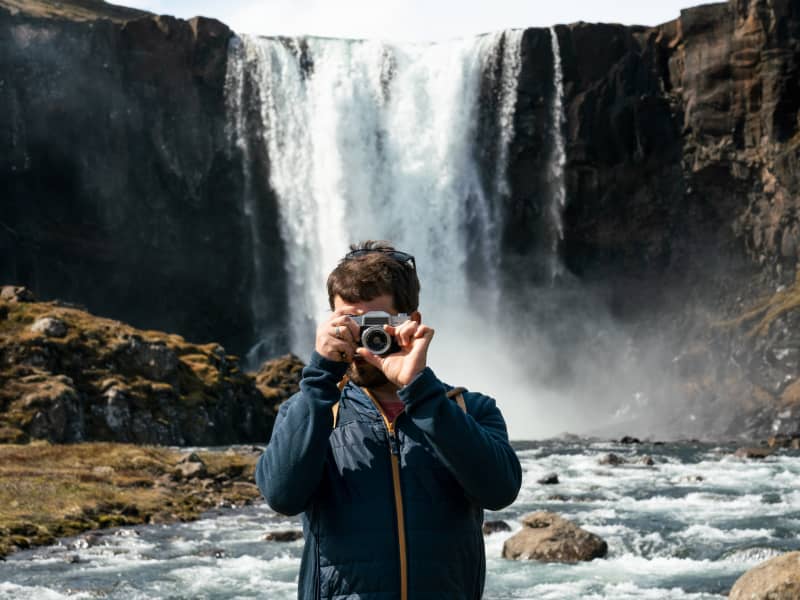
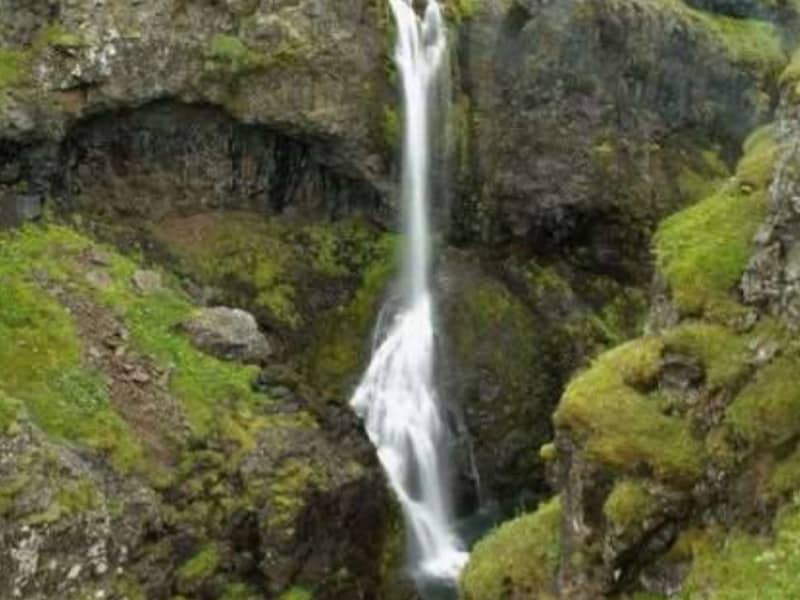
Gufufoss waterfall is a beautiful waterfall in Seyðisfjörður. The name is due to the steam emitted by the waterfall and envelops it in a certain mystery. The road over Fjarðaheiði lies next to the waterfall, and the access to it is very good.
Stórurð
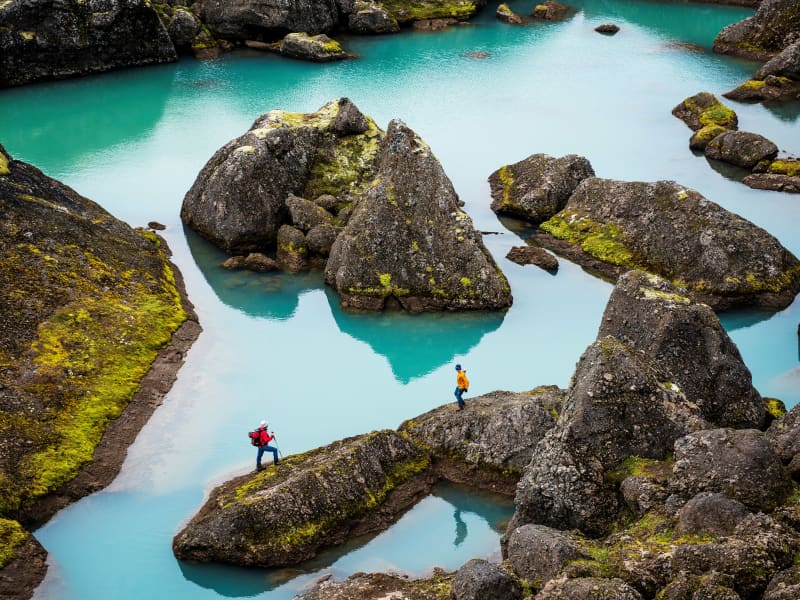
Stórurð boulders is one of Icelands most spectacular sights and has gained more popularity amongst hikers in recent years. The expansive surroundings offer plenty to see and experience; blue-green ponds contrast with flat, vegetated meadows surrounded by sheer-sloped and jagged tuff Dyrfjöll mountain peaks. As the name suggests, the area is strewn with many enormous boulders, likely abandoned by retreating glaciers. Five marked trails lead to and from Stórurð. Two from Vatnsskarð pass, one from Njarðvík and two from Borgarfjörður Eystri. Since Stórurð is located over 400 m above sea level, snow often lingers far into summer so best time for exploring this magnificent area is from mid-July to first appreciable snows of autumn. The hike back and forth takes about 4-5 hours so consider this a day tour.  
Lindarbakki
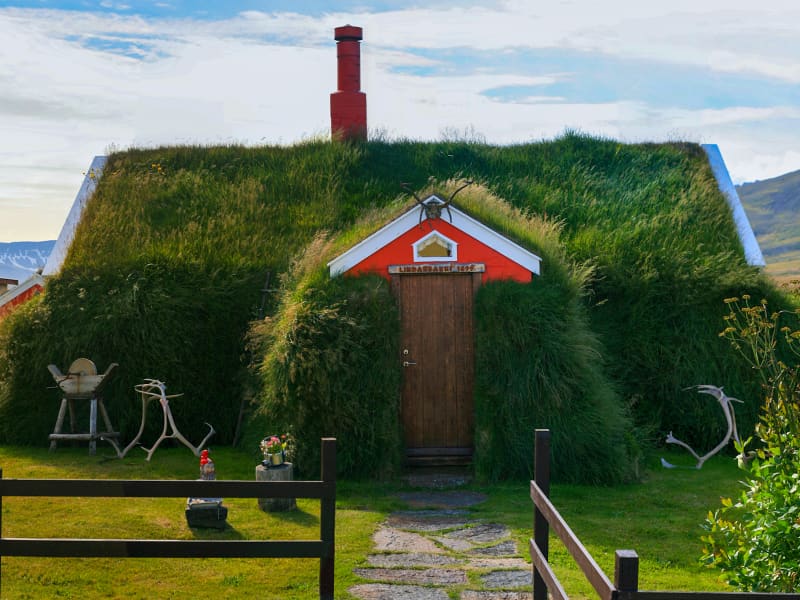
Borgarfjörður Eystri is known for its unique beauty and rich history. Lindarbakki, a small, beautiful turf house, has captivated many visitors with its picturesque look. A must see when visiting the village. The house is typical of its time, originally built in 1899 but parts have been rebuilt since. 
Steinasafn Petru
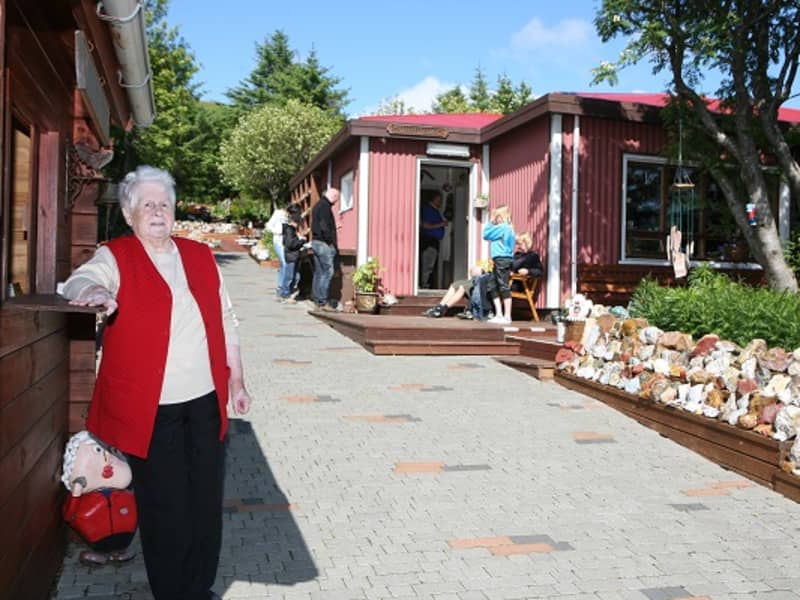
Ljósbjörg Petra María Sveinsdóttir was interested in stones all her life and started to collect them in earnest in 1946. Most of her stones were found in Stöðvarfjörður and other places in East Iceland because Petra didn´t go much looking for stones in other parts of the country. In 1974, Petra decided to open her home for all those that wished to look at her stones.  Petra´s receives many visitors each year and it has become one of the most popular tourist destinations in East Iceland. It´s obvious to all those that visit Petra´s, that she was an efficient stone collector but not many people know that she collected more than stones.  Petra collected marked pens, cups, and numerous other small paraphernalia and for most of her life, she collected eggs, shells, and conches. For sure, Petra´s house has slowly acquired the appearance of a nature museum, but first and foremost, it´s a home. Open from May 1st to October 31st, seven days a week from 09:00 am to 5:00 pm. Kaffi Sunnó In the year 2015, an old dream came true when Kaffi Sunnó was opened. The guests can buy delicious soups and bread, hot and cold drinks and something sweet. Open from May 1st to October 31st, seven days a week from 09:00 am to 5:00 pm. 
Víknaslóðir
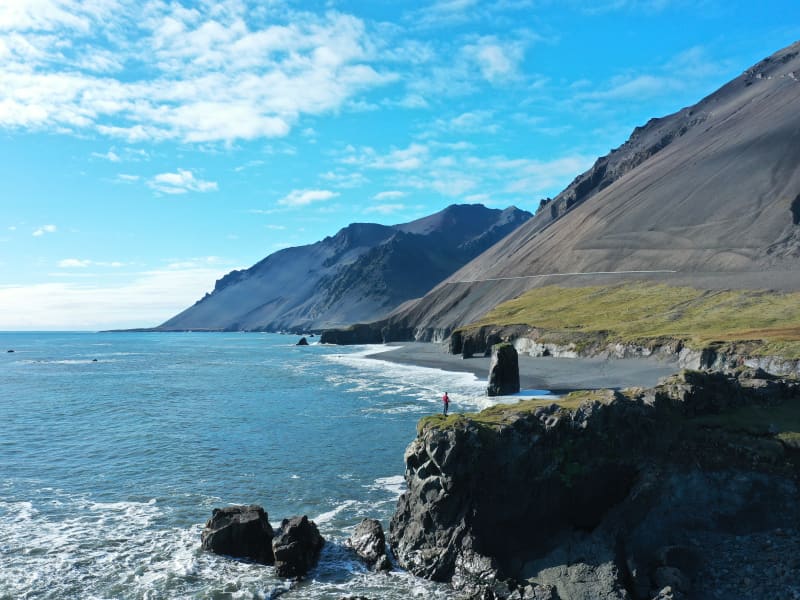
Víknaslóðir trails, sometimes also referred to as Trails of the Inlets is a vast net of well-marked and versatile hiking routes reaching from the village in Borgarfjörður Eystri to Loðmundarfjörður. Locals have through the years marked out and maintained numerous trails, making the area a rightfully called hiker's Paradise. They also publish a high-quality hiking map and operate comfortable hiking lodges with facilities in Breiðavík, Húsavík and Loðmundarfjörður, deserted inlets and fjord, south of Borgarfjörður Eystri. The mountains come in all shapes and sizes and the variety of colors is stunning; everything from the black sand beaches to the pinkish orange hues of the mountain ridges. The trails wind themselves between isolated coves and fjords over colorful hills and through green valleys all the way down to the coast. Abandoned houses and ruins of ancient farms leave their mark on the surroundings. Travellers can easily spend a few days in the area exploring and taking in the breathtaking views. Tourism companies in Borgarfjörður Eystri offer hikers all kinds of services related to their journey, whether it be tour planning, guidance or transport.
Brúnavík
Brúnavík is a deserted inlet just south of Borgarfjörður Eystri, renowned for its serene surroundings. A hike back and forth from the parking lot at Hafnarhólmi marina across Brúnavíkurskarð pass (360 m) down to the ruins of the farm is approx. 12 km. Crossing at the mouth of the river is an absolute must to appreciate the colorful beach. The way back crosses the Brotagil ravine across the bridge to pass Hofstrandarskarð (320 m). The hike takes about 5-6 hours on a marked trail.
Eggin í Gleðivík - The Eggs in Merry bay
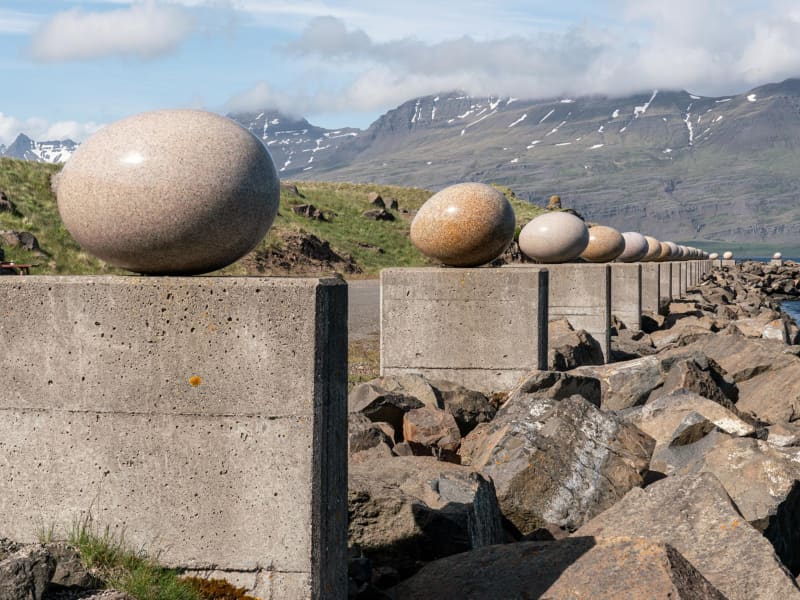
Eggin í Gleðivík (the eggs in Merry Bay) is an outdoor artwork by artist Sigurður Guðmundsson (b. 1942). The artwork has 34 replicas of eggs of nesting birds that nest in the vicinity of Djúpivogur and reflects the strong connection that Djúpivogur has with nature. The work is especially for the site. The eggs stand on concrete pillars that previously supported a landing pipe between the pier and the smelter. Eggin í Gleðivík are a popular tourist attraction and has become one of Djúpivogur´s landmarks.
Hálsaskógur
Hálsaskógur is in Búlandsnes, a short distance west of Djúpivogur. The forest area is very nice and there are signs providing information about the forest, such as the tree species, as well as tables and benches. There are footpaths going through the planted forest which makes it particularly suitable for those who prefer light walks.
Tvísöngur Sound Sculpure
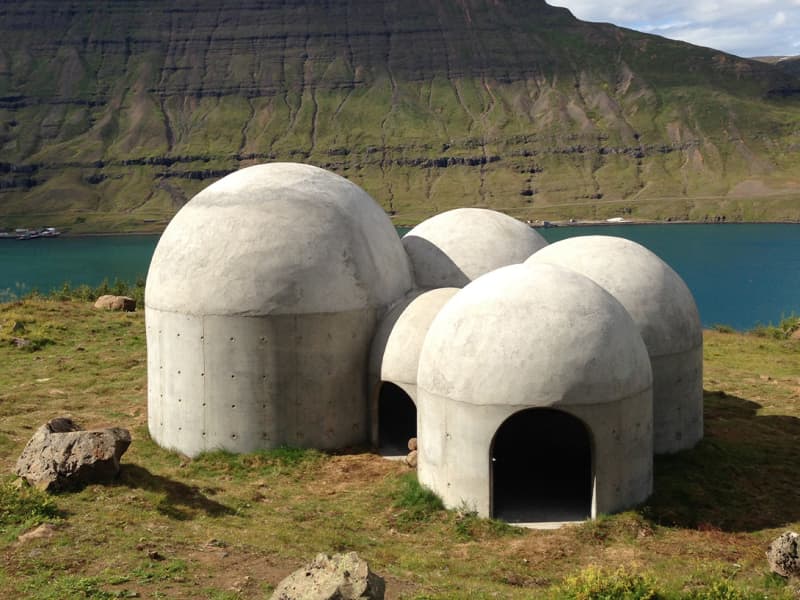
Tvísöngur sculpture, by artist Lukas Kühne, mixes concrete, nature, and sound to create an interactive tribute to Iceland’s unique tradition of five-tone harmony.  The installation piece looks like a grouping of interconnected cement bubbles from afar. Up close the five segments are quite large, ranging from roughly 6 to 12 feet tall and can be entered via rounded arches built into the walls. Once inside the stark industrial domes, visitors will find that they have each been designed to resonate at different harmonies as the wind blowing in off the cliff rushes through the openings. The collective effect is almost as though the wind itself is playing a giant instrument. The five chambers of the piece are meant to recall the Icelandic musical tradition of quintal harmony, with each dome reflecting a tone in the tradition. Juxtaposed with the serene and stark surroundings, it seems as though Iceland itself is creating the music. Tvísöngur is a permanent work and is meant to keep the country’s musical traditions alive, which is not an easy thing to do simply with concrete.
Brimnes
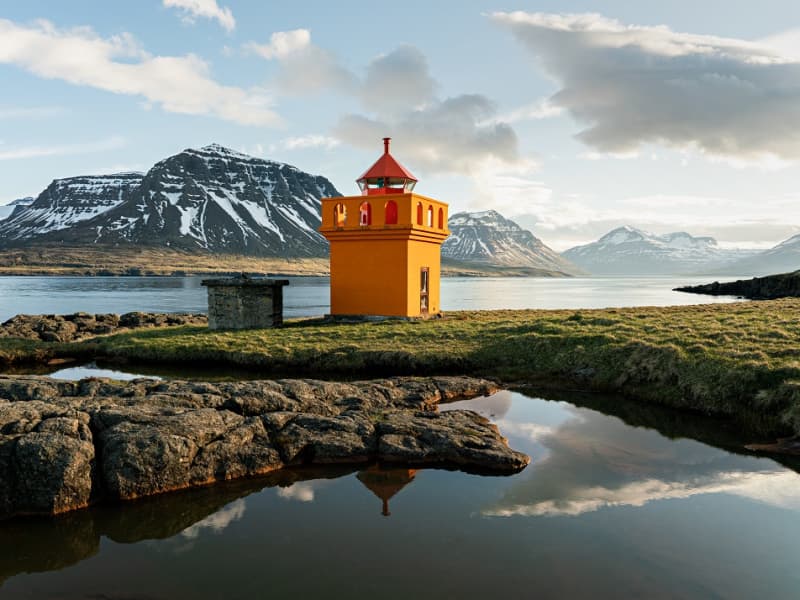
Brimnes is an abandoned farm located on the northern side of Seyðisfjörður. It stands beneath Brimnesfjall, which acts as a protective barrier against the north wind. The highest point above the Brimnes farm is Ytra Rjúpnafell, which reaches 771 meters. The upper part of the mountain is characterized by steep and high cliffs, while the lower slopes are green, covered with shrubs and heather. Further out on the peninsula, the land is steep with difficult scree valleys.The coastal vegetation gives the land a distinct appearance. A hike to Brimnes in good weather is unforgettable. The nature is magnificent, and the view to the sea and over the fjord is beautiful. It is also an ideal place to reflect on the history of settlement in this remote location. The best starting point for the hike is Selstaðir, accessible by road No. 951 from Seyðisfjörður. A road was cleared to Brimnes before it was abandoned, but it is no longer driven. The sea route was the main supply route for the residents for most of the time.   Brimnes was a large farm in earlier times. The land was considered excellent for farming, and fishing was practiced. Several small farms were also in the vicinity of Brimnes, including Brimberg near the current lighthouse and Borgarhóll about one kilometer inland from Brimnes. The farm was inhabited until 1961 when the residential house burned down. Significant fishing was conducted in the late 19th century and early 20th century, forming a small community (Brimnessettlement). The Brimnes farm itself was located above Brimnestangi, and just outside it, above Útvogur, an icehouse was built in 1894, one of the first two icehouses in the country. The Brimnes lighthouse was built in 1906 and stands a short distance from the Brimnes farm. The residents of Brimnes engaged in fishing, and numerous visiting boats also fished there in the summer, providing the farmers with income from services. Several buildings related to fishing were constructed during these years, but most were only used in the summer. At the end of the 19th century, up to 40 rowboats operated from the Brimnes settlement in the summer, many from the Faroe Islands. This fishing activity ceased when motorboats became common, as proximity to fishing grounds was no longer as crucial. Remnants of old buildings can still be seen in the area. Near the farm is the place name Klausturskemmutangi, indicating that Brimneswas once owned by Skriðuklaustur monastery in Fljótsdalur.   Brimnes is not only beautiful, peaceful, and prosperous but also a place where nature and the struggle for survival could be harsh. In 1732, an avalanche struck Brimnes farm, killing nine people, while another nine survived. Some sources mention that nine days later, a four-year-old girl was found alive in the ruins. This winter was likely heavy with snow and was subsequently called Brimnes winter. In 1740, a boat carrying, among others, a county governor, was wrecked on a skerry later named Sýslumannsnaggur, located about one km outside Brimnes lighthouse at Sléttanesvogur. Then, on the morning of May 1, 1922, in calm and foggy conditions, the coastal ship Sterling ran aground on the same skerry. All on board, about 50 passengers and 30 crew members, were rescued. They reached land in lifeboats, and the ship's steward served refreshments on a place called Ostabalar nearby. The passengers were allowed to retrieve their belongings from the ship before the Danish coast guard transported them to the harbour at Seyðisfjörður. Goods and various ship items were salvaged from the ship, which was destroyed at the stranding site. There are well-documented records of this stranding, including a list of passengers and crew and an inventory of items salvaged from the ship and sold at auction. This event drew considerable attention since maritime transport was vital for the settlements at that time, with coastal ships transporting people, mail, and goods around the country. Sterling was among the first ships owned by the Icelandic state and was the only coastal ship at that time.   

Bjólfur
Towering 1,085 meters over Seyðisfjörður, Mount Bjólfur offers one of the most rewarding panoramic views in Austurland. This 5.8 km one-way hike begins at the Stafdalur ski lodge and follows an old mountain track originally laid for fiber-optic cable installation. The route crosses the Stafdalsá river, passes a striking waterfall, and continues steadily up the ridge. The summit features a rock cairn and guestbook, but if you descend slightly beyond the top, you’ll reach a dramatic viewpoint directly above the fjord and the town below. This is a moderate out-and-back hike with around 645 meters of elevation gain, taking about 3 to 4 hours round trip. Snow can linger on the upper slopes, so it’s best done from late June onward. Wikiloc | Bjólfur Trail 
Beljandi
In Breiðdalsá, close to the farm Brekkuborg in Breiðdalur valley, is the Beljandi waterfall. In fact, there are two waterfalls; Ytri Beljandi and Innri Beljandi, and eponymous pools. The waterfalls are not very high, but they are beutiful and well worth the short hike from the road through Breiðdalsvík. The whole area is extremely beautiful and suitable for outdoor activities.
Streitishvarf
Streitishvarf is a great outdoor area, suitable for the whole family. A beautiful, short hiking trail offers a brilliant insight to the geological history of Austurland, especially the dikes that are characteristic for the area. Although the hiking trail is short, it is a great place to stop for a few hours; to play and enjoy the nature. A lighthouse was first built at Streitishvarf in 1922 and it operated until 1958, when it was removed due to the building of a new lighthouse in Breiðdalsvík. the Streitisviti lighthouse operating today was built in 1984.
Flögufoss
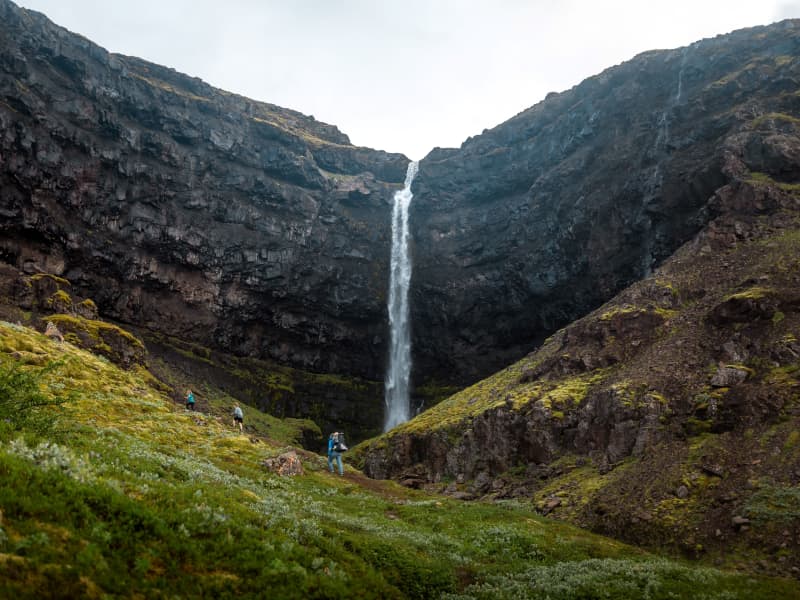
Flögufoss is the highest waterfall in Breiðdalur valley, around 60 meters high. The waterfall is in the river Flöguá that runs through the Flöguskarð mountain pass. Just above Flögufoss is another small waterfall that falls to a ledge, from where the river runs under a small rock arch.  The hiking path leading to the waterfall is easy and short.
Meleyri
Meleyri is one of those quiet yet powerful places in East Iceland where it’s good to walk, breathe deeply, and ground yourself. The black sand, the mountains, and the vast open landscape create a unique sense of calm, and many people feel a strong connection to the natural energy of the area.Locals use the area a lot all year round, especially in winter, as the sand is usually free of ice. Many people walk their daily routes there, enjoying the sea air and the calmness.  
Mjóeyri
Mjóeyri is a beautiful place outside the village in Eskifjörður. There is a lighthouse and a beach where it is fun to play.  Mjóeyri was the last execution site in Austurland, and there is an information board on the grave of the last man who was executed at Mjóeyri.  Today, Mjóeyri is a thriving tourism place where, among other things, you can get guidance around the area.
The French Graveyard - le cimetiere francais
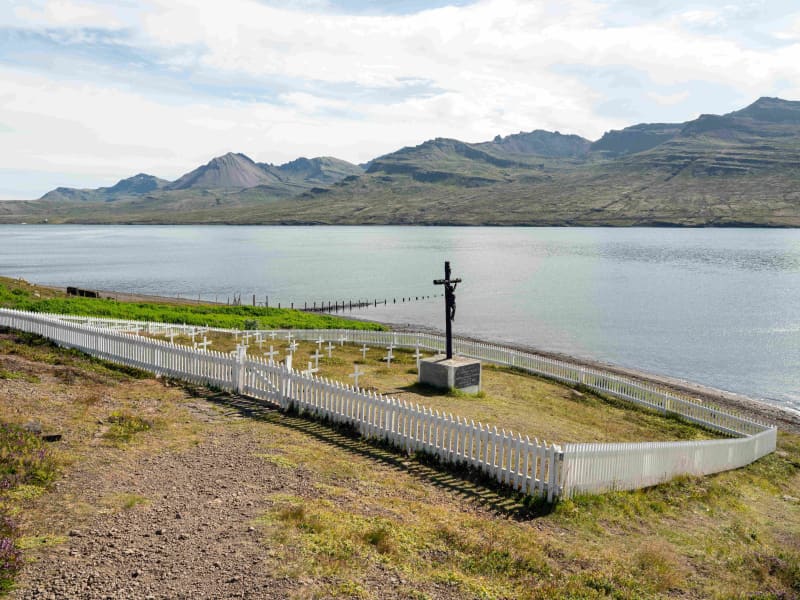
Just outside the Fáskrúðsfjörður town is a monument with the names of 49 French and Belgian sailors who died in Iceland. In 2009, representatives from the Association of Fishermen of Gravelines arrived at the French Days town festival and delivered new crosses for the graves of the French fishermen. Gravelines is an old fishing town on the north coast of France and the sister town of Fáskrúðsfjörður. During the French Days town festival, two wreaths of flowers are laid at the monument in the French graveyard in memory of the Icelandic and French sailors who have died at sea.
Sandfell
Sandfell is a distinctive 743m. high rhyolite mountain between Stöðvarfjörður and Fáskrúðsfjörður. The best approach is from the south side of Fáskrúðsfjörður. The trail leaves the coastal road between Víkurgerði and Vík farms and proceeds along the Víkurgerðisá River before cutting west for the peak. The scenery is excellent en route, with views of Fáskrúðsfjörður, Andey and Skrúður islands. Powered by Wikiloc
Gilsárfoss
A pleasant hiking trail leads from Vattarnesvegur, on the east side of the urban area on Fáskrúðsfjörður, up along Gilsá. There are numerous beautiful waterfalls on the way and you can walk behind one of them. That waterfall is called Gilsárfoss.  It takes about 15 minutes to walk to the waterfall from the road. Powered by Wikiloc
Helgustaðanáma Hiking Trail
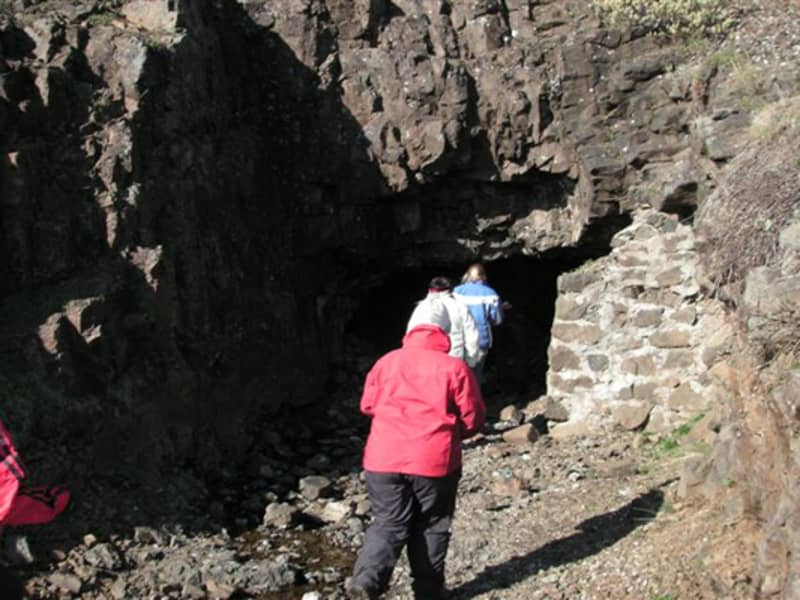
The Iceland spar mine in Helgustaðaland can be found on the way from Eskifjörður to Vöðlavík, and a footpath leads to it. Helgustaðanáma is an old Iceland spar mine in the land of Helgustaðir in Eskifjörður, which was protected as a natural monument in 1975. Helgustaðanáma is one of the most famous spar mines in the world, where spar was excavated from the ground from the 17th century until the first half of the 20th century. Most of the Iceland spar in museums around the world comes from the mine at Helgustaðir, but some of the largest and purest specimens of spar in the world were found in Helgustaðanáma. Iceland spar is a particularly clear crystal of the rock calcite, but the rock played a vital role in developing various studies on the properties of light. Today the Iceland spar is protected, and it is strictly forbidden to remove it from Helgustaðanáma.
Wartime Museum
At the Icelandic Wartime Museum, you can travel back to the days of the Second World War and the military occupation of Reyðarfjörður. The museum gives a vivid insight into life during the war in a country which has never had an army or been at war - with this one exception. The focus is on the impact of the occupation on the local population. On the first of July, there is a festival in memory of this unique event in Icelandic history.
Einbúi
Jafnadalur is a valley in Stöðvarfjördur facing northward. At the core of the vale, there is Einbúinn - "The Hermit"- , a voluminous and solitary rock in otherwise flat surroundings. The Jafnadalur also boasts a 6 m. stonearch, located to the east of Mt. Álftafell. A walking trail connects Jafnadalur and fjord Fáskrúðsfjörður. These are agreeable surroundings and well-suited for short or extensive hikes.   Powered by Wikiloc
The Stone Arch in Jafnadalur
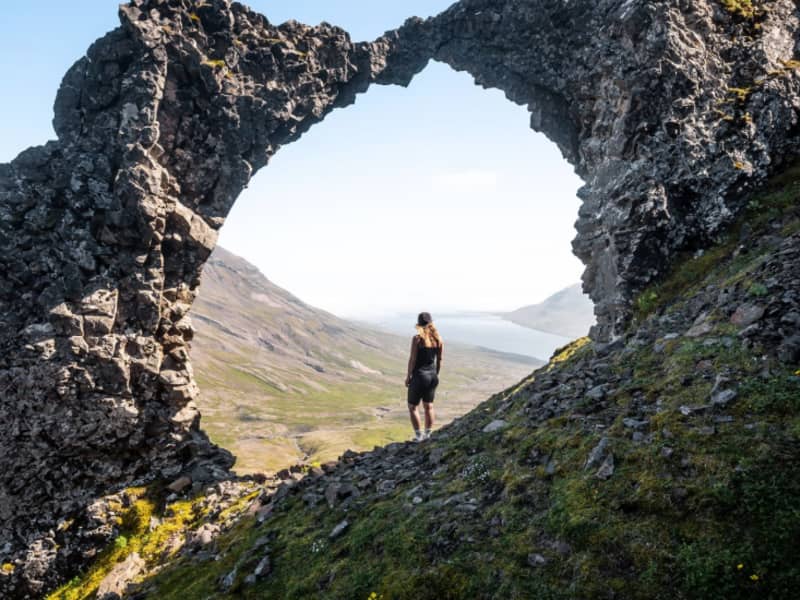
Tucked into the slopes of Mount Álftafell above the Jafnadalur valley, this natural stone arch is a hidden gem for hikers seeking a short but rewarding outing. Formed by centuries of erosion, the arch is a striking example of Iceland’s raw geological beauty. The trail begins in the village of Stöðvarfjörður and leads through the peaceful Jafnadalur valley. Along the way, you'll pass Einbúi, “The Hermit”, a solitary rock formation that rises dramatically from the valley floor. The path continues gently uphill toward the arch, offering views of the surrounding mountains and fjord. This hike is suitable for most walkers and typically takes around 2 to 3 hours round trip. The route is best enjoyed from late spring through early autumn, when the trail is clear and conditions are favourable.   
Búðará
Búðará flows right through Reyðarfjörður town. In the center of the town, you will find the start of a beautiful hiking trail that runs along the river through the forested riverbank of Búðará. When you come to the War Museum, you can choose whether to walk along with a wooded lookout point along the ridge east of the War Museum or up to Búðarárfoss waterfall.
Vattarnes
The Vattarnes peninsula is part of a beautiful coastline between Reyðarfjörður and Fáskrúðsfjörður. Vattarnesviti lighthouse is located on Vattarnes. It used to be part of the official way between those two towns, which are now connected by a tunnel. On a good day, choosing the longer way is well worth it.
Páskahellir Cave
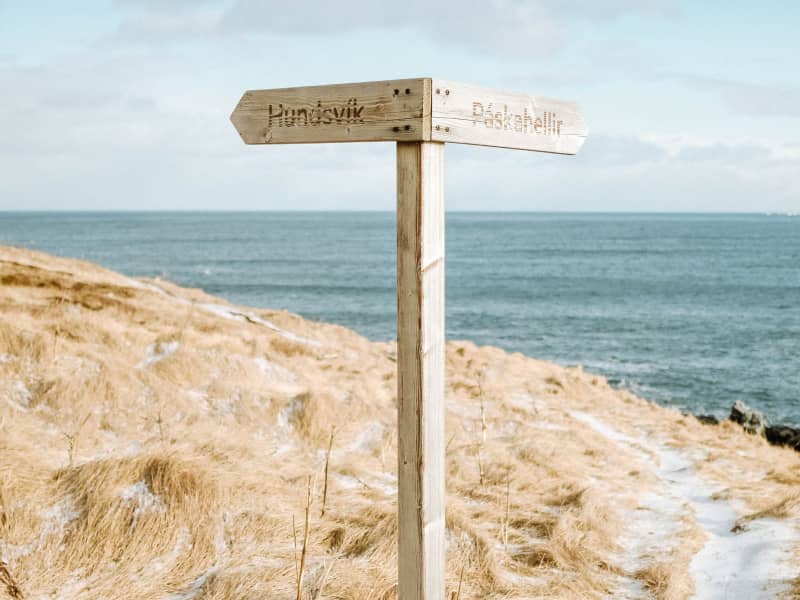
In the Neskaupstaður Nature Reserve, there are enjoyable hiking trails, including one to Easter Cave. A marked trail starts from the parking area at the edge of Neskaupstaður, following the coastline above the sea cliffs to a staircase that descends into the rocky shore by the cave. You can either continue and climb up outside the cave or return the same way. Easter Cave is a grotto carved by the waves, and at its end, you can see cylindrical holes left by trees that likely stood in a lush forest that was buried under lava about 12 million years ago. These holes are now often used as nesting sites by rock pigeons. Near the cave, you can also see beautifully shaped pillow lava, impressive rock dikes, and in some places, hollows filled with quartz crystals and other minerals. Deposits create beautiful patterns in the dark cliff walls, and water drips from the rocks. In winter, this often results in beautiful ice formations and large icicles on the cliff walls. There is a beautiful view over Norðfjörður Bay to Barðsneshorn and Rauðubjarg with its eternal sunshine. The sea, with its small creatures, stands in pools, and in summer, the cliffs are adorned with swathes of blue lilies. There is abundant birdlife along the shore, such as fulmars, gulls, eider ducks, auks, and various ducks. It is very common to see harlequin ducks in summer, and the winter wren often stays near the cliffs by the staircase, frequently singing for hikers.   It is said that on Easter morning, one can see the sun dance in the cave, and for many years, the Fjord People’s Travel Association has organized hikes to the cave on Easter morning to try to witness this phenomenon. The story also tells that on Easter morning long ago, the farmer from Bakki managed to capture the slough of a beautiful seal maiden who, along with others from Pharaoh's company, had come ashore to celebrate. The farmer married her, and they had seven children. She eventually regained her slough and returned to the sea to her other seven children. Later, the same farmer improved his cattle by capturing a sea cow, breaking its bladder at Uxavogur, a location on the shore near Easter Cave. It was believed that the seal maiden had sent her former husband this blessing. The legend says that sea cattle can be identified by their sea-grey colour and the bladder between their horns or on their noses. They become tame immediately if the bladder is burst, losing their sea nature. In the barn, sea cattle can be recognized by always turning their heads toward the sea.   
Dalatangaviti
At Dalatangi, there are two lighthouses. The older one was built by the fishing operator Ottó Wathne in 1895. He paid for the lighthouse construction, which is made of basalt with stone glue in between. The Danish Lighthouse Institute then provided lighting fixtures, a kerosene lamp, and a mirror to amplify the light. Following the construction, the National Treasury took over the operation of the lighthouse. The younger lighthouse was built in 1908 and is still in use. The road to Dalatangi lies from Mjóifjörður town. It is not possible to drive further east in Iceland. At Dalatangi, there is an excellent view to the north, to Glettingur and into Loðmundarfjörður and Seyðisfjörður. Dalatangi has a weather station, and a regular observations have been made there since 1938.
Bustarfell Museum
In Hofsárdalur in Vopnafjörður you will find the old family farm Bustarfell, a quaint, centuries old Icelandic turf house with red gables and a grass-grown roof which is now a museum. Bustarfell is one of the oldest and best preserved turf houses in Iceland. In 1532, the farm was bought by Árni Brandsson and his wife Úlfheiður and has been owned by their descendants ever since.  A visit to the museum at Bustarfell is a journey through the history of farming in Iceland and changes in lifestyle from the beginning of the 18th century to the mid-20th century. When walking through the museum, you feel as if the inhabitants have only just left the house. Three kitchens from different eras are showcased, as well as other artifacts from around the farm which show how technology has developed.    Hjáleigan Café is located next to the museum, and a hiking path leads to the rock Álfkonusteinn, source of a local folktale.  Opening hours: 10-17 every day from June 1st to August 31st.
Hengifoss í Seldal
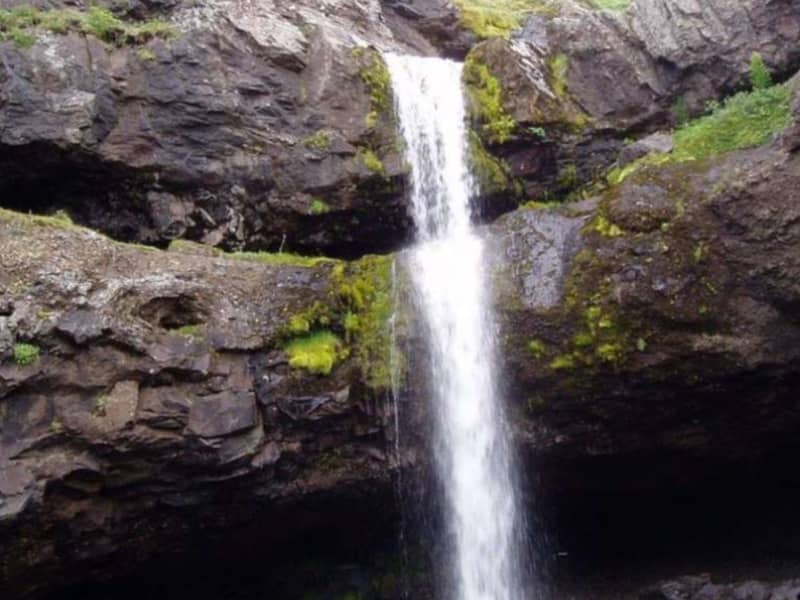
Norðfjörður's highest waterfall Hengifoss, is in the river Hengifossá, which flows from Oddsdalur valley into the valley Seldalur. The canyon is exceptionally pretty and lush.  
Eastfjords Adventures
Eastfjords Adventures is an Adventure company based in Seyðisfjörður, East Iceland. We believe that adventure is not just about adrenaline and heart-pounding excitement; it's about discovering the true essence of a place, immersing ourselves in its stories, and connecting with its soul. We strive to provide you with more than just a guided tour; we want to create lifelong memories and forge a deep connection between you and the stunning nature that surrounds us. We offer a variety of activities such as Hiking and snowshoeing tours Kayaking tours e-MTB tours Jeep tours Tailor made tours based on your unique wishes For more information click here 
Exploring Seyðisfjörður
Exploring Seyðisfjörður was founded by two local brothers who share a deep love for nature and adventure. Growing up in the fjords, we have always been fascinated by the beauty of the sea and the wildlife that inhabits it.  After years of exploring the coast on our own, we decided to share our passion with others and started our own boat tour business. Our goal is to provide our guests with a unique and unforgettable experience, where they can witness the stunning scenery and encounter fascinating wildlife that the fjords has to offer.  We take pride in our knowledge, and are passionate about sharing our expertise and making sure that our guests have a safe and enjoyable trip. We believe that our boat tours are not just a way to explore the fjords, but also a way to connect with nature and create lasting memories.  We are committed to providing a personalized and authentic experience that will leave our guests with a sense of wonder and appreciation for the natural world. Join us on one of our boat tours and let us take you on a journey through the most breathtaking spots on the coast. We look forward to sharing our passion
Puffin Adventures
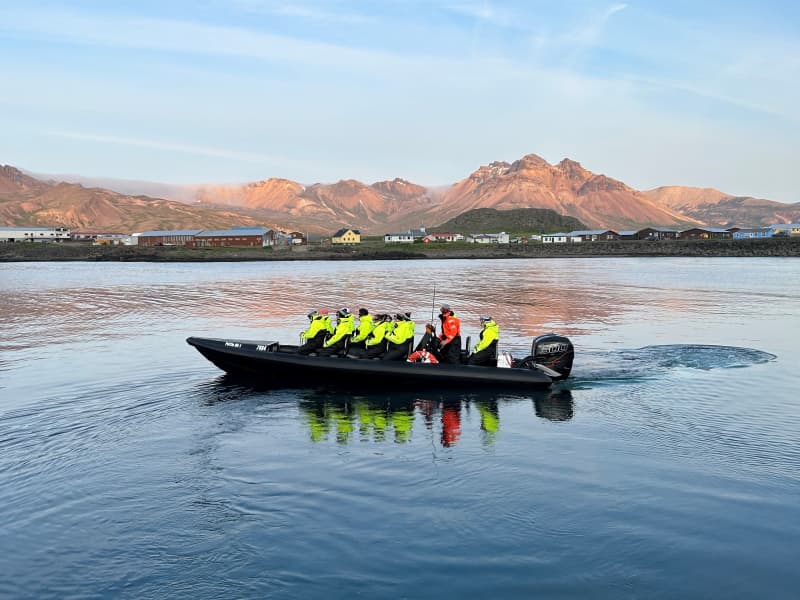
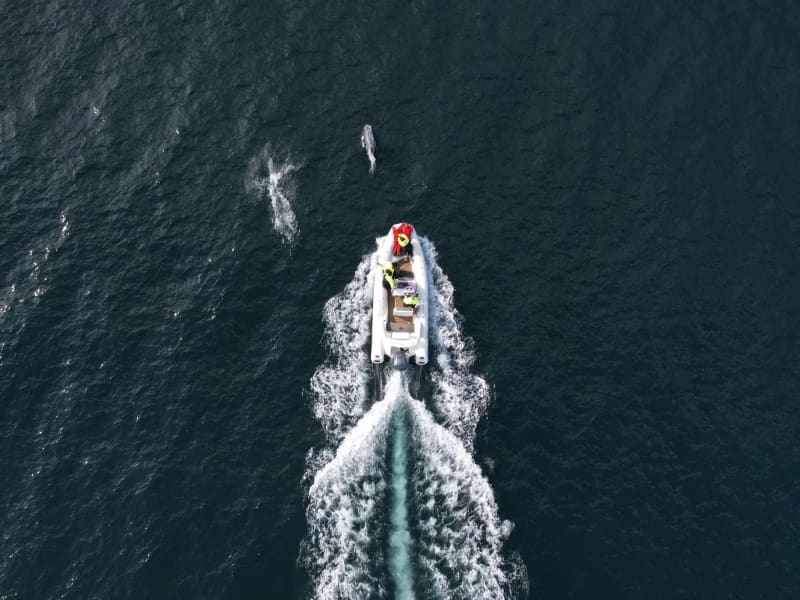
Puffin Adventures is a family-owned and operated RIB safari tour company in Borgarfjörður eystri. Driven by love for nature and wildlife, Puffin Adventures specializes in delivering tours that enable visitors to immerse themselves in beautiful landscapes, towering cliffs, and captivating wildlife of this magical area.  Puffin Adventures primary objective is to create unforgettable experiences and forge memories that will be cherished for a lifetime. We are dedicated to ensuring that each visitor enjoys a truly remarkable and memorable adventure.  You can look us up on Instagram and visit our website puffin.is.  
Fjord Bikes
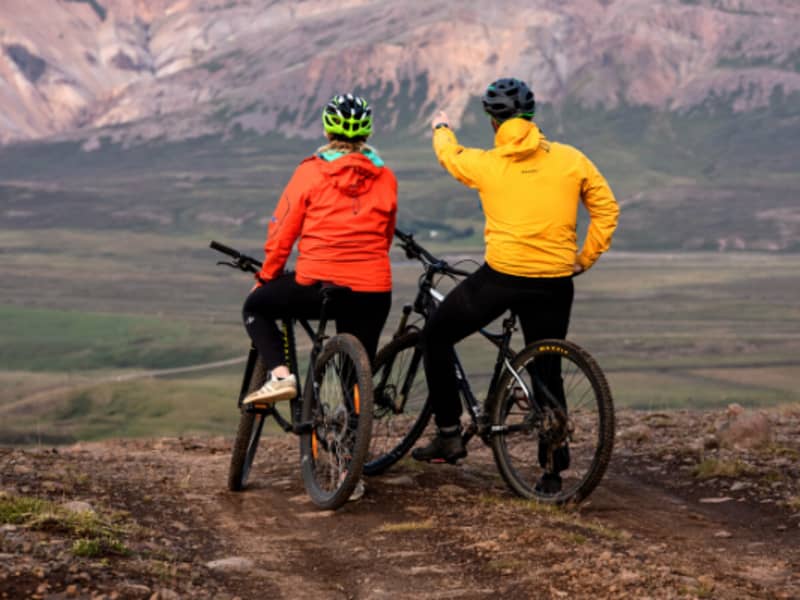
Borgarfjörður eystri (in east Iceland) is one of those places where you can always look into the distance and see something incredible that you would love to experience up close. Mountain Biking allows you to get personal with nature, yet also lets you experience the thrill and speed of zooming through the landscape. Combine this with the striking natural landscape of the area surrounding Borgarfjörður eystri and you are in for an unforgettable ride.  We at Fjord Bikes invite you to experience with us the amazing birdlife, the natural wilderness area and historic fishing village of Borgarfjörður eystri. Close to the town you can find the Puffin Marina, which is by far the best place to see the fabled Atlantic Puffin up close. In the surrounding areas you can get into the wilderness. This is an area in the surrounding viks and fjords, where decades ago there was a vibrant agrarian society, now deserted and reclaimed by nature. There you can find beautiful waterfalls, expansive vistas, valleys, and gulches made of the colourful rock called Rhyolite. Ride the long way around to the black sand beach in Breiðavík, where rhyolite rocks polished by crashing waves give the sand a splash of colour. Brave up the challenging old trading route Sandaskörð to witness the beauty of the highlands surrounding Mt. Dyrfjöll and the unrivalled natural splendour of Stórurð. When biking in Borgarfjörður, you’ll always find something new to do.  
Maritime Museum
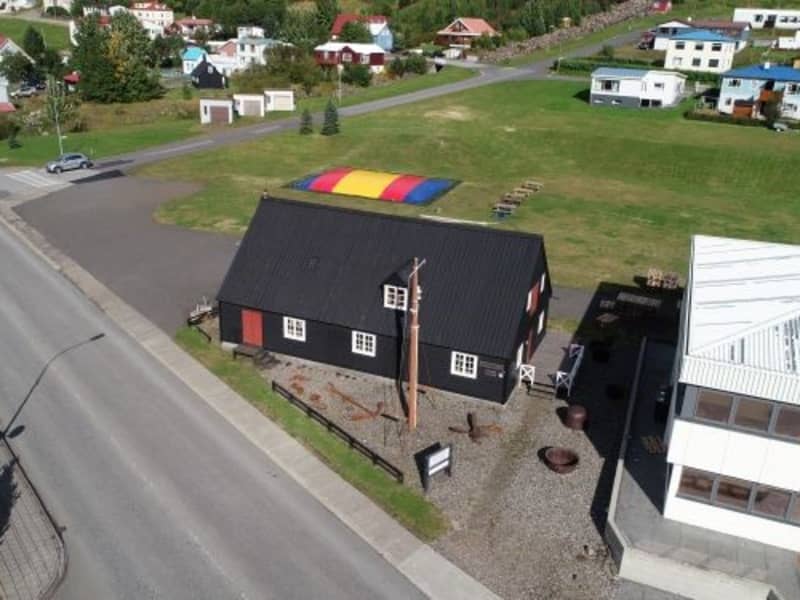
The museum mostly exhibits objects and utensils relating to fishing and seafaring in general. It also displays various reminders of local trade, industry, and medicine from times past. The collection is in a commercial building, “Gamla búð”, built in 1816. Hours of Operation: June, July, and August: 13:00 - 17:00 daily or by arrangement with the manager, tel. 470 9063
Technical Museum of East Iceland
Join us in the Old Mechanical Shop for a journey through history and innovation at our exhibition „Búðareyri – stories of transformation“. The exhibition tells us the history of Búðareyri, the part of Seyðisfjörður that was hit by a major landslide inDecember 2020. On the exhibition we combine innovative multimedia solutions with traditional technology offering a rich bilingual experience for visitors of all ages.  In the Harbour garden you can discover the rich history of women in Seyðisfjörður around 1900 at our outdoor exhibition„Working Women“. The exhibition explores the range of different jobs held by women and their significant economic contributions to society during this immense period of change in Iceland from 1880 to 1920.  Opening hours at the old mechanical shop  15 May – 30 June: Mondays – Saturdays, 13 – 17  July 1 – August 31: Mondays – Saturdays, 11 – 17   September 1 – 15: Mondays – Saturdays, 13 – 17Winter: By agreement: tekmus@tekmus.is 
Eskifjörður Swimming pool
An outdoor swimming pool that is warmed up by a geothermal well. The swimming pool is 25 x 12 meters and outside. It has 2 hot tubs, a sauna, 3 different water slides, and a children's pool. From the swimming pool, you can see out over the fjord and into the mountains. http://www.visiteskifjordur.is/what-to-do/swimming-pool/ Opening hours Summer Monday - Friday: 07:00 - 21:00 Saturday: 10:00 - 18:00 Sunday: 10:00 - 18:00 Opening hours Winter Monday - Thursday: 07:00 - 20:00 Friday: 07:00 - 18:00 Saturday: 11:00 - 16:00 Sunday: 11:00 - 16:00
Seyðisfjörður Swimming Pool
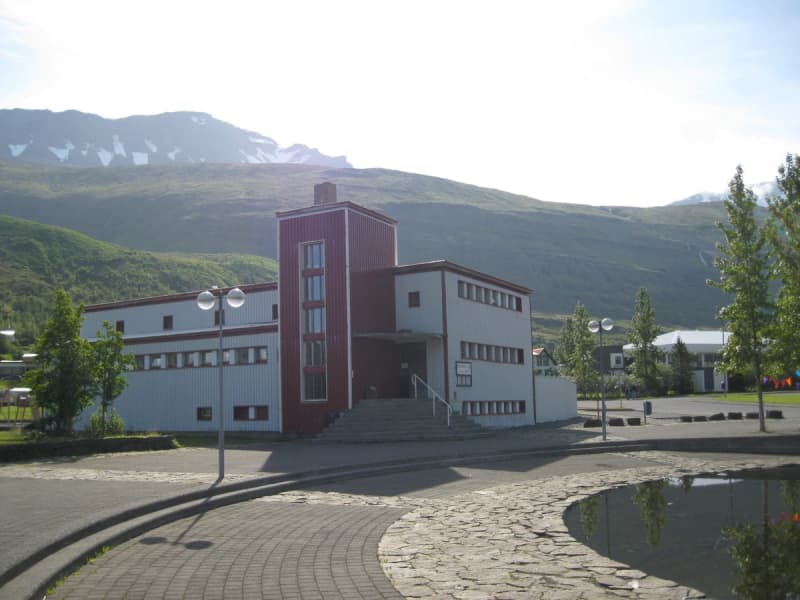
Seyðisfjörður swimming hall is a charismatic indoor swimming pool with hot tubs and sauna. Seyðisfjörður Swimming Hall was built in 1948 and was designed by Gudjón Samúelsson, the State House Master. The swimming hall formally opened on July 8, 1948. The indoor swimming pool is 12.5 x 7 m, small but friendly, with a great view towards the mountains surrounding the fjord. The swimming hall as two hot tubs (indoor) and a sauna. You can walk out to a small garden to enjoy the sun and fresh air. Be aware of the quirky information signs found inside the swimming hall – designed by a former employee of the swimming hall and give the building a personal and charismatic touch. Openings hours: September to May : Monday - Wednesday - Friday from 7:00-10:00 and from 16:00-20:00 Saturday from 13:00-16:00 Tuesday - Thursday - Sunday are closed June to August : Monday to Friday from 7:00-11:00 and 15:00-20:00 Saturday from 13:00-16:00 Sundays are closed
Kolfreyjustaður
The vicarage Kolfreyjustaður in Fáskrúðsfjörður dates back to the year 1878 many old and beautiful artifacts are there to be seen. The place swarms with stories and legends.  The troll Kolfreyja lends her name to the site and her fellow troll lived on the island of Skrúður.  
Stapi in Lækjavík
In Stapavík, south of Djúpivogur an close to Höfn, there is a majestic cliff rising about 20 meters out of the sea. It is landlocked and is a little way from the mainland cliff. Popular with locals and tourists alike, the cliff the beach south of Álftafjörður are considered unique natural gems and therefore essential stops when visiting the area.
Njarðvíkurskriður and Naddi
Until the year 1949, when passable road came about, all traffic through the Njarðvíkurskriður screes between Njarðvík and Borgarfjörður Eystri was either on foot or on horseback. Njarðvíkurskriður were considered extremely dangerous, especially in winter, because of avalanches and, when raining heavily, mudslides. In such conditions, travellers in the area were putting their lives on the line. The screes hold sheer cliff drops down to the sea and above them steep slopes of mudslides, riddled with gullies. The road to Egilsstaðir from Borgarfjörður over the pass at Vantsskarð was opened in 1954, significantly higher up in the screes that the old horse track. Most recent road construction was in the year 2019 when the road was paved. More than one version exists of the folk tale of Naddi. Legend has it that in the time of the family of Björn Skafinn, the road along Njarðvíkurskriður became almost impassable because of a monster which had the lower body of a man and upper body of a beast and lived in a gully since named Naddagil. This monster ambushed travellers, especially after dark, attacked them and killed many. Finally, a valiant farmer from Borgarfjörður Eystri managed to overcome the ominous monster and force him into the sea. A cross was erected to mark the spot and still stands there. Mystery surrounds the cross in Njarðvíkurskriður, bearing a Latin inscription and the date 1306. Many have written about this cross and speculated about its age an why it was erected in the first place and then constantly renewed. The folk tale of the monster Naddi is connected to Njarðvíkurskriður and the cross, which is sometimes called Naddakross as shown in this old four-line stanza: The cross of Naddi is fallen tower. Our lives are lacking protection but God´s sacred pover will ensure its resurrection.
Rainbow Street in Seyðisfjörður
The small town of Seyðisfjörður is famous around Iceland for its colour and creativity. One of its best-known features is the Rainbow Street (referred to as Regnbogagatan in Icelandic) in the heart of town, which can best be described as a beautiful community project. On a sunny day in the summer of 2016 the town's residents got the idea to paint Norðurgata, a cute street in need of some love and restoration. That same night, people in town as well as the town’s employees got together and painted the colours of the rainbow onto the street – unknowingly creating one of the most popular visual landmarks in East Iceland. Year round, guests from all over the world come to visit the Rainbow Street in Seyðisfjörður to snap a "selfie" of themselves on this colourful street, surrounded with old historic houses which the town is also known for. At the end of the street stands the town’s picturesque church, usually referred to as “Bláa kirkjan” or the Blue Church. Ever since then the residents get together regularly each summer to repaint the street, and everyone is welcome to take part.  The Rainbow Street is located right in the town’s center and close by are some great restaurants, the local handcraft market and Blóðberg, a design boutique, all worth checking out. One of Iceland’s best sushi restaurants, Norð-Austur on the second floor of Hotel Aldan, serves sushi from the freshest ingredients available. Café Lára is the perfect stop for some soul food, juicy burgers, and local fish.  Every summer, the Blue Church Summer Concert series takes place and has become one of the major cultural events in East Iceland. It offers a varied program of music where some of the country’s most interesting musicians perform.  Seyðisfjörður is one of the highlights on our Fjord to Fjord travel route. If you are currently travelling around East Iceland or planning your next trip, we highly recommend taking checking out our travel routes for inspiration.
Helgustaðanáma Hiking Trail
The Iceland spar mine in Helgustaðaland can be found on the way from Eskifjörður to Vöðlavík, and a footpath leads to it. Helgustaðanáma is an old Iceland spar mine in the land of Helgustaðir in Eskifjörður, which was protected as a natural monument in 1975. Helgustaðanáma is one of the most famous spar mines in the world, where spar was excavated from the ground from the 17th century until the first half of the 20th century. Most of the Iceland spar in museums around the world comes from the mine at Helgustaðir, but some of the largest and purest specimens of spar in the world were found in Helgustaðanáma. Iceland spar is a particularly clear crystal of the rock calcite, but the rock played a vital role in developing various studies on the properties of light. Today the Iceland spar is protected, and it is strictly forbidden to remove it from Helgustaðanáma.
Hólmanes
Between Reyðarfjörður and Eskifjörður you can visit the Nature reserve Hólmanes. This is an ideal place to enjoy a good walk either down to the sea or up the hills. Birds and remarkable rock formations can be enjoyed in Hólmanes. With luck, you could stumble upon a herd of reindeers. Powered by Wikiloc